Asil Al-Sabti, a Karam young leader

Asil Al-Sabti

live life because life is beautiful

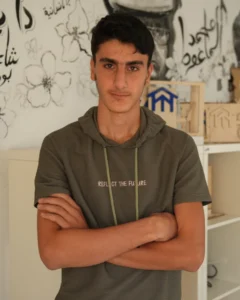
One day, as Asil was browsing through the channels of her TV,  she decided she wanted to become an actress in a movie. Little did she know that a few weeks later she would receive a phone call asking her to be featured in a documentary film — a film that tells the story of Amal.

Amal is the refugee girl whose story we’ve been following through The Walk. Asil’s story is not that different from Amal’s; both fled their homes at a young age, lost their mothers, and are searching for a place to feel safe again.

The film’s release is highly-anticipated. When asked if she told her friends about her experience being on camera, Asil said, “I loved doing it. I had so much fun filming and meeting new people, and I can’t wait to share it with my friends. But I am waiting for it to come out in a few months.”

Two scenes Asil filmed have left her with great memories. One is by the sea, where she got to play and sail paper boats, and the second one is in the kitchen, where she cooked and ate with her sisters.

Following her dream to keep others safe and restore justice, Asil wants to be a police officer when she grows up. However, her dream of acting still stands. She continues to dream that she can do both.

It is this belief that informs Asil’s advice to children her age: “live life because life is beautiful.”

More stories

Yasser Khoulani, a Karam young leader

Yasser Khoulani

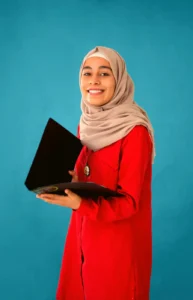
From Code to Cosmics

When I was ten, my world collapsed—literally. My father was out with friends in Damascus when an airstrike hit. The blast sent a wall crashing down on them. He didn’t survive.

When I was ten, my world collapsed—literally. My father was out with friends in Damascus when an airstrike hit. The blast sent a wall crashing down on them. He didn’t survive.

I didn’t fully grasp what had happened, only that my life split into a ‘before’ and an ‘after.’ The ‘before’ was my home, my father’s voice, the steady rhythm of childhood. The ‘after’ was leaving it all behind.

From Damascus, we moved to Idlib, then to a camp in Atmeh in Northern Syria, before finally crossing into Turkiye. My mother grieved. I tried not to. As the eldest son, I had to be strong, but there were moments when the weight of it all pressed down like that collapsing wall in Damascus.

For a long time, I thought of survival as the end goal. Get through today. Figure out tomorrow when it comes. But then, something shifted.

It started with a question: What if I could build something instead of just making it through?

I had always been fascinated by computers, though most of what I knew came from watching YouTube videos on borrowed screens. I had tried coding on my own, but without guidance, it felt like trying to build a bridge without knowing where the first plank should go. Then I heard about a place where kids were learning programming, robotics, and design. A space filled with tools I had only seen in videos—fast computers, laser cutters, 3D printers. It sounded unreal.

When I walked into Karam House for the first time, I wasn’t sure what to expect. But I remember this: the air buzzed with ideas. The people inside weren’t just waiting for life to happen to them—they were creating it, and I wanted in.

At first, the programming courses intimidated me. Python. Typhoon. Loops and variables that didn’t make sense—until suddenly, they did. I wasn’t just learning how to code; I was learning how to think differently. My team and I built Cosmic, a game where I programmed the players, obstacles, and mechanics. I could see my ideas come to life on a screen, and for the first time in years, I felt like I was moving forward, not just holding on.

But Karam House wasn’t just about learning a skill. One day, I watched someone working on a laser cutter and stood back, curious. Instead of ignoring me, they asked, “Want to try?” That was the kind of place it was—where every curiosity had room to grow, where no one treated you like a refugee first.

Now, as I prepare for graduation, I see the road ahead differently. I’m not just the boy who survived a war. I am a programmer. A builder. Someone who can create instead of just endure.

To those who make spaces like this possible: You’re not just keeping the lights on. You’re sparking something that lasts far beyond these walls.

My name is Yasser Khoudani. I am not just a refugee—I am a creator, programmer, and a dreamer. And you know what? This is only the beginning.

Bayan Al Jaafar, a Karam young leader

Bayan Al Jaafar

Karam is a big part of my life

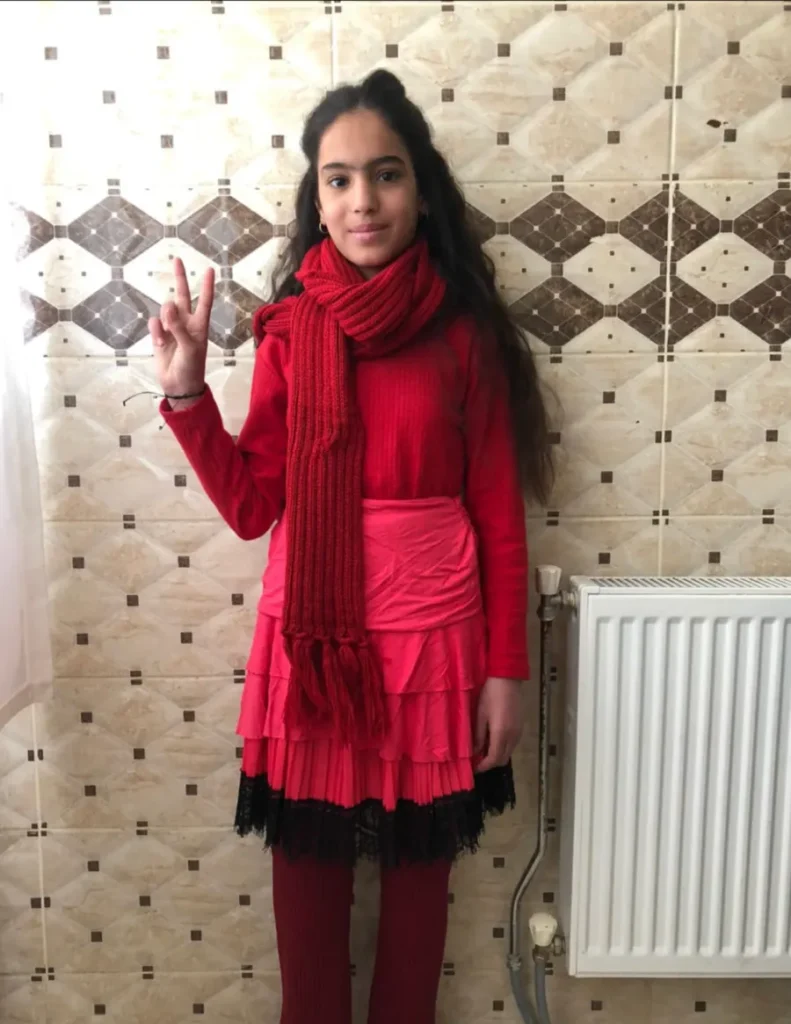
Leaving home at 10 years old, Bayan doesn’t have much memory of her house in Idlib. All she remembers is packing her bags with her five siblings and parents, and heading to Reyhanli, Turkey.

Leaving home at 10 years old, Bayan doesn’t have much memory of her house in Idlib. All she remembers is packing her bags with her five siblings and parents, and heading to Reyhanli, Turkey.

Their first stop was a refugee camp she can’t remember the name of. It could be because her brain refuses a memory so painful, or she was too young to recall. Moving from one school to another was very difficult, and making friends was almost impossible because of the fear that at any given moment she could be moving somewhere else. “It was difficult then,” she says,” but now I am thankful that I met all of these different people.”

After leaving the refugee camp in Reyhanli, Bayan and her family stayed with her uncle until they found their own place. To her, Turkey is her second home, “At this point of my life, I’ve lived in Turkey more than I’ve lived in Syria.”

In 2017, Bayan joined the Innovative Education program at Karam House. She said having Karam House in Reyhanli was a miracle and a life-changing experience. Through Karam, Bayan met new people and learned skills that helped her during her present and her future. “Karam is a big part of my life. Through Karam House, I met so many people that changed the way I think and introduced me to so many new cultures. This was the first time I held a camera in my hand, and ever since then, I knew that photography was one of my passions. Karam House, in particular, is an important place for Syrians to improve their talents and get to know themselves better so that they don’t get lost…so that they learn about the right path.”

Bayan graduated from Karam House in 2019, but that wasn’t the end of her journey. She applied to Karam’s scholarship and was awarded it to study Business Administration. Because Karam opened so many doors for Bayan to expand her skills, she put those skills to work to support herself and her family.

Among the many things that Bayan does, she holds photography sessions for friends and family . “Not a lot of people come to me for photos because I don’t have a camera, I use my phone. But I do end up with great results even with just a phone camera.There is so much that you can do with phones nowadays.”

Bayan also translates articles, books, and blog posts from Turkish to Arabic and Arabic to Turkish. “My biggest accomplishment in translation and something I am very proud of is translating a chapter of a book of prophet Muhammad’s Hadiths (Sayings) from Turkish to Arabic. Another thing that Bayan does is that she works in graphic design, something she learned from her father and through YouTube, in addition to volunteering in The Syrian Students League, where she runs the Media Branch. Her goal this year is to become the president of the Media Branch.

“Karam made me feel that I belong somewhere. Despite the great people and community around me, I don’t feel that I belong to Turkey. But I also don’t feel that I belong to Syria either because I left so young. I am stuck in between. But when I enter Karam House, I know this is where I’m supposed to be.”