
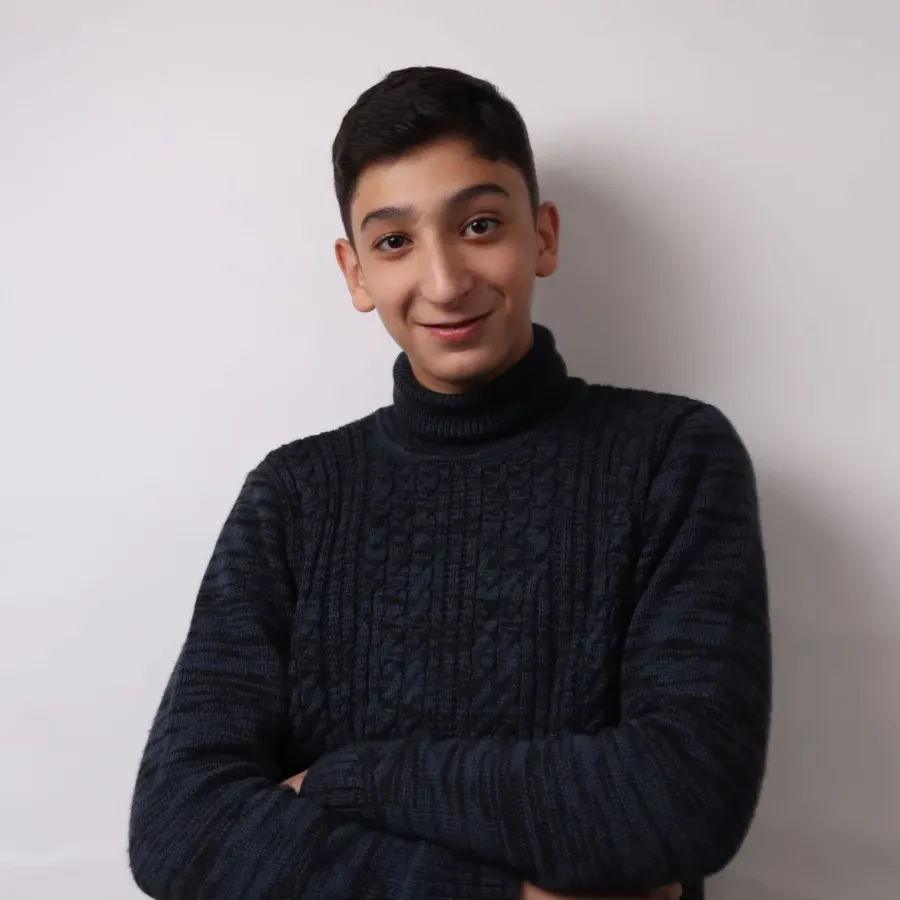
Wael Ajlouni, a Karam young leader

Wael Ajlouni

Do not hide your creativity: Draw, Write, Search

In an effort to fit into the new society that they now must call home, many refugees take extra steps to prove themselves to the natives of the adopted country. They start by mastering the language, engaging with the community, and focus on giving back.

Wael Ajlouni left his hometown in Damascus and came to Istanbul, Turkey, with a goal in mind to improve himself and give back to the place that welcomed him and his family.

With difficulties making connections and not knowing many people, Wael found it hard to engage, until he learned about and joined Karam. Immediately after joining the studios, Wael’s creativity and love for his community was evident in his work.

In a studio, Reimagining The Classroom, the students—including Wael— were asked to design and fabricate interactive objects that provide new ways of school-based communication, especially after going virtual and being entirely online . These ways should be designed to help students and teachers understand one another and effectively act according to each problem they face in a fun and innovative way.

In his description of his own project, Performance Management, Wael said: “Each child is talented in their own unique way. The key to discovering that talent is education. However, sometimes education doesn’t allow students to realize their talents. One of these things that could stand in the way of discovering themselves is distant learning. Therefore, it is important to spread awareness about the importance of education, and the importance of discovering oneself and their talents.”

His goals for the project are spreading awareness of the importance of discovering one’s talent and working to grow it, increasing confidence in regards to that talent, and bringing out the creativity that lives within students, no matter what field they are interested in, whether it is scientific, literature, or artistic.

The first step of the studio is researching and then conducting an interview with a teacher before implementing the project. Therefore, Wael chose one of his teachers and interviewed them. However, the teacher did not like the idea of the project and rejected it.

The rejection Wael received from the teacher did not stop him from pursuing his project. If anything, he was more determined to finish the project and show the impact it could have on the students.

After the final version of the project was finished, Wael took it to his class and showed it to his teacher. They were impressed by the outcome and even decided to implement the project in their classroom.

Now, the project is going to be placed in the school hallway where all the students can see it and interact with it.

The project is divided into an upper area, which is intended to encourage students to participate in different activities to discover their talent through phrases describing its use.

The phrases include:
Do not hide your creativity: Draw, Write, Search. 

Draw and don’t worry about the results. 

Write and live somewhere else.

Research and understand your own world. 

Don’t be afraid of the results if you never try. 

Don’t stop, the future is still ahead. 
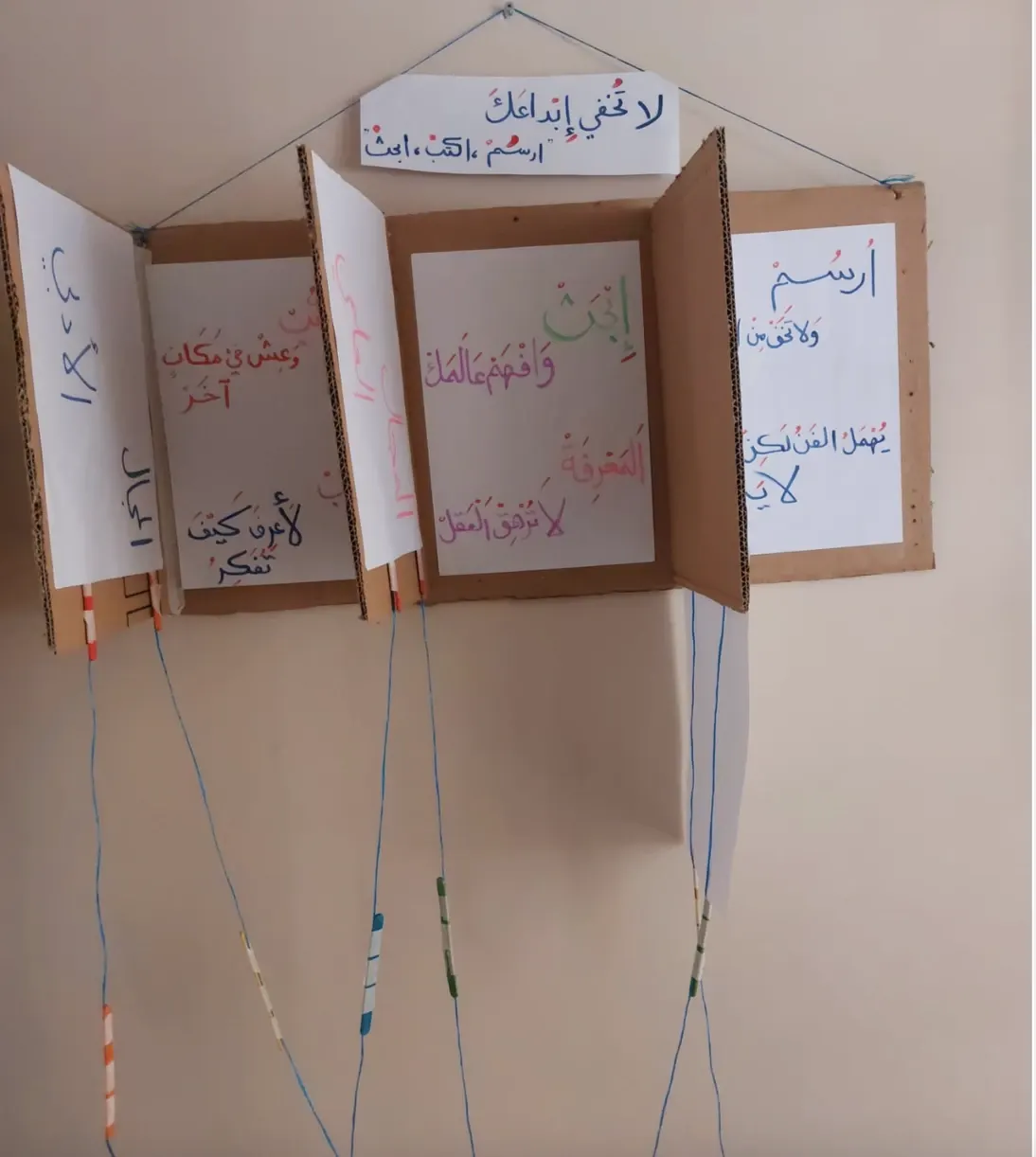
The main upper area is followed by three separate sections, with two hanging strings on which the students’ answers will be hung.

To Wael, this project will always remind him that when we have an idea, we must not give up and continue until the end to achieve it, or implement it. When we want to present an idea, we must prepare for it well, because an insufficient explanation or wrong details may be a reason for rejection.
More stories

Mohamad Hadaya, a Karam young leader

Mohamad Hadaya

From Trauma to Triumph

When Mohamed was just 16, walking to a class he was taking in his small town, a group of boys approached him and pushed Mohamad to reveal where he was from. Innocently and proudly, he said he was from Syria, but the answer resulted in a brutal attack. The gang of boys surrounded him, ripped his headphones off, and began beating him mercilessly. Punches to his face, kicks to his back, stomps onto his chest— he was outnumbered and caught off guard. In broad daylight, people passed by, and no one stepped in to help.

When Mohamed was just 16, walking to a class he was taking in his small town, a group of boys approached him and pushed Mohamad to reveal where he was from. Innocently and proudly, he said he was from Syria, but the answer resulted in a brutal attack. The gang of boys surrounded him, ripped his headphones off, and began beating him mercilessly. Punches to his face, kicks to his back, stomps onto his chest— he was outnumbered and caught off guard. In broad daylight, people passed by, and no one stepped in to help.

He finally managed to stumble away and escape, but the attackers pulled him back in again. A series of more punches and kicks followed until a fellow Syrian on a motorcycle intervened and pulled him away. Shocked and confused, Mohamed somehow still continued on his way to get to his class. It wasn’t until his teacher saw him beaten and shaken that the reality of what had happened settled in. The teacher called his father, who then went to the police station to file a report. However, unable to speak Turkish properly, his father was mocked by the officers. Mohamed stood there, feeling powerless, as he watched his father struggle with the officers. Even now, three years later, there’s been no word from the police about his case.

The trauma of that attack stayed with Mohamed. He avoided the route where it happened, changing his walking path to school. He realized he developed a fear of being alone in public. The scars of the attack, both physical and emotional, ran deep.

Then, in 2023, Mohamed found something that changed his life forever. He learned about Karam House, and it was there that he found a place not just to learn but to heal. The moment he stepped into the space, the atmosphere felt different. It was inviting, it was alive, and most importantly, it was safe.

Karam House became a sanctuary for Mohamed. Here, he wasn’t a burden or an outsider. He was a creator, a learner, and part of a community. In studios, he discovered passions that reignited his love for learning, like music and robotics. One of his favorite experiences was building a simulated robot explorer designed for exploration. The project filled him with excitement and pride.

Karam House didn’t just teach Mohamed technical skills; it taught him resilience. He learned how to overcome setbacks and how to value the journey just as much as the destination. Mentors at Karam House helped him find direction and purpose, and they became the support system he so desperately needed.

With time, things in Mohamed’s life started to get better. While the racism towards him didn’t quite disappear, he learned to navigate it, realizing that attacks weren’t as easy for others to carry out against him now that he was older and wiser.

Now, as a university student studying computer engineering, Mohamed looks to the future with optimism, and the lessons he learned at Karam House continue to guide him. Though the wounds of the past still linger, the hope he found at Karam House gives him strength to keep going.

Naseem AlSabti, a Karam young leader

Naseem AlSabti

Karam House changed my life

I’m Nassim Sabti; I’m 17 years old and in 11th grade. I am currently living in Reyhanli, Turkiye, with my family. I’m originally from Homs, Syria; my life took a drastic turn at the age of seven when the Syrian conflict forced me and my family to flee.

I’m Nassim Sabti; I’m 17 years old and in 11th grade. I am currently living in Reyhanli, Turkiye, with my family. I’m originally from Homs, Syria; my life took a drastic turn at the age of seven when the Syrian conflict forced me and my family to flee.

A Journey of Resilience

One night in Homs, we were awoken by the deafening noise of a rocket hitting our neighbor’s house. We were so scared and couldn’t go back to sleep that night; we didn’t know if another one was going to hit us. That was the moment my mother decided it was time to leave Syria. With only my mother and five sisters, we headed north, eventually crossing the border into Turkiye, leaving behind a home. Despite the hardship, my dream of becoming an ophthalmologist or engineer in the future was one of the few things I took with me from Homs.

When I first arrived in Turkiye, we were enrolled in a Turkish school. There was a language barrier to begin with, and to make things even more difficult; I faced discrimination just for being Syrian. Teachers yelled at me; students pulled my hijab. Even basic needs like going to the bathroom were denied, with threats to give me a bad grade if I dared. One day, my urgency outweighed the fear of consequences, and I stood up for myself. Frustrated with the mistreatment, my uncle made the decision to transfer us to Al Qaria School, a haven for Syrian girls.

Discovering Karam House

I learned about Karam House from my uncle, and with the desire to learn, connect with people, and adjust to life in Turkiye, we joined the Karam Families program. As soon as I was eligible, I eagerly became a part of Karam Studios at the age of 13. Over four transformative years, Karam House has become not just a learning space but a second home, providing me with a supportive community and a platform to explore my passions.

Overcoming Language Barriers

Navigating a new language presented its challenges, but my uncle recognized its importance. Enrolling in a Turkish institute, I gradually mastered the language, opening doors to better integration.

Family and Culinary Skills

I lost my father to the war when I was six years old, and my mother passed away about five years ago. Now, I live with my grandmother, my five sisters, and two uncles, including my uncle Hamza, who has been our anchor. A moment of pride for me was stepping up to cook for the family when my grandmother fell ill. Cooking, a newfound hobby, allowed me to express my determination through dishes like Kabseh and cake.

Deep Sea Bots and Innovation

My favorite studio at Karam House, “Deep Sea Bots,” became a turning point in my journey. Collaborating with my studio partner, Mohamad Ghandoura, we created “Creeto the Savior,” a robot inspired by the pufferfish designed to rescue people during natural disasters. The challenging brainstorming process ignited my dedication and unleashed my creativity.

Karam House: A Safe Haven

My journey at Karam House goes beyond learning skills; it’s about finding a safe haven. The supportive environment, dedicated mentors, and inspiring team at Karam House have reshaped my life.

To those facing challenges, I say, be strong, be confident, know your goals, and pursue them relentlessly. Karam House changed my life. From computer skills to Arabic development, Karam House has been the catalyst for my personal and academic growth.

As I approach graduation in 2024, my mission is to carry the spirit of Karam House with me, sharing the remarkable impact it had on my life and inspiring others to overcome challenges with strength and determination.