Ruba Darkhabni, a Karam young leader

Ruba Darkhabni

It’s my second home

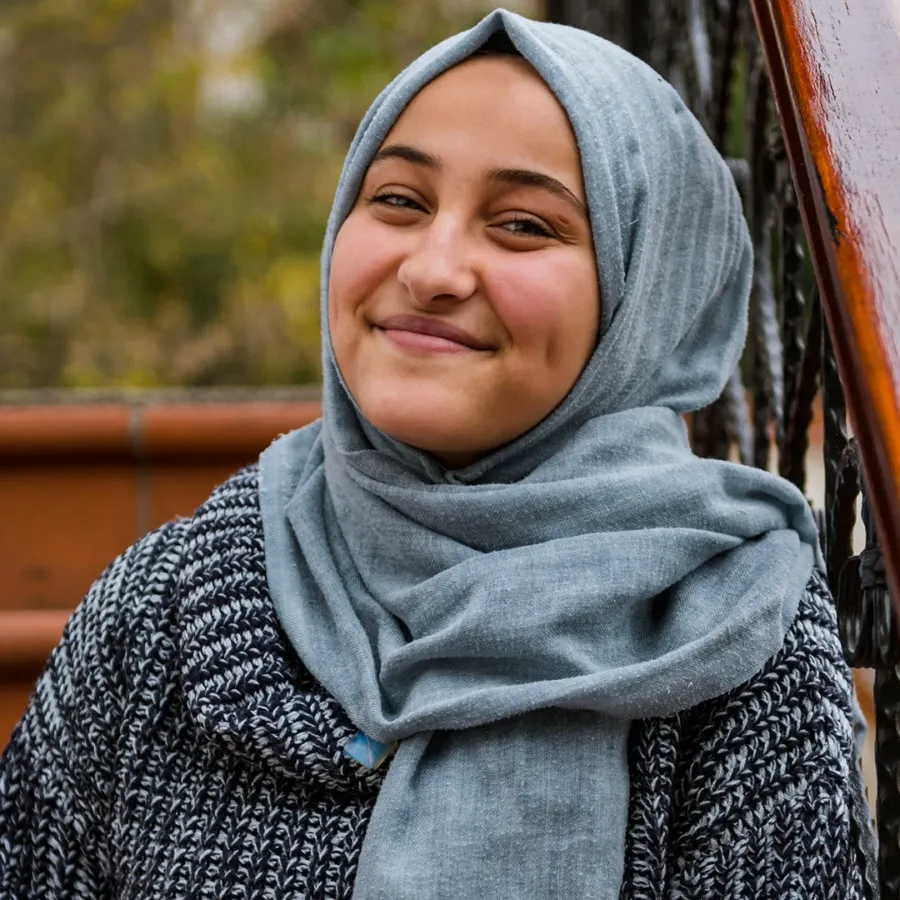
My name is Ruba, and I am originally from Damascus, Syria. I go to high school and I also study culinary. It holds a very special place in my heart.

My family came to Istanbul at the end of 2013, and we haven’t been anywhere since. I left Syria when I was in fourth grade, but what I remember from life there is that it was average in the best way possible. We’d go to school, spend time with family, and do things just like everyone else.

My family had a farm, and we’d go there to pick olives and gather other vegetables that we grew ourselves. There were new vegetables every season — in summer, it was one thing and, in winter, it’d be something else. Life was good, or so it seemed. I was too young to understand what was actually brewing or happening in the country.

Since moving to Turkey, I can say that Karam House is where I feel this same sense of comfort. It’s my second home.

It’s not like school — it’s nothing like school. There are weeks when I would come here every day, coming and going even with no workshops or studios just to see if the mentors needed help. I would tell them I can come and help you. Just let me go to Karam House, stay there and have fun. I’ll learn new things without even trying.

On the topic of learning, It’s true that we learn a lot here, but we learn it in a new way. We solve our problems, and we do things I never thought possible. We also get to meet new friends. The atmosphere is just really warm—you feel the love and collaboration wherever you are. Everyone helps one another, and everyone likes one another. It’s amazing.

I have a lot of hopes for the future, but my biggest dream is to open my very own restaurant. The cuisine will be a fusion between Syrian food and Western food. It’s true that there are restaurants like this already, but I believe that I can create new combinations and new food fusions.

I hope that the situation will get better in Syria. I would love to go back and have a location for my restaurant in my home country.

More stories

Mahmud Mardini, a Karam young leader

Mahmud Mardini

Thank you from the bottom of my heart

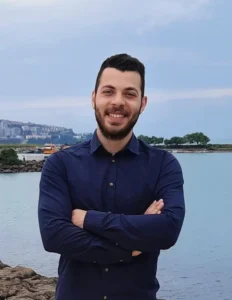
At age 15 Mahmud left Syria with his two older brothers, sister, and parents. They went in pursuit of safety and a better future, leaving behind everything they had already lost. Yemen was their first stop. His dad had worked at the Yemeni Embassy in Syria, so it was safe for them to enter the country. Shortly after their move to Yemen, his father passed away, leaving the family on their own to figure out how they could survive. They opened a restaurant and lost everything seven months later when the war in Yemen began.

At age 15 Mahmud left Syria with his two older brothers, sister, and parents. They went in pursuit of safety and a better future, leaving behind everything they had already lost. Yemen was their first stop. His dad had worked at the Yemeni Embassy in Syria, so it was safe for them to enter the country. Shortly after their move to Yemen, his father passed away, leaving the family on their own to figure out how they could survive. They opened a restaurant and lost everything seven months later when the war in Yemen began.

Their next stop was Turkey. They had nothing, having lost everything in both Syria and Yemen. Mahmud was still under 18 years old, so he went back to Syria with his mother in hopes that they could rebuild what they had lost, and that he could go back to school. The dream turned out to be just a dream. While in Syria, Mahmud was arrested twice, and their neighborhood was under attack and bombing. As more and more of his friend left, the stress of an unknown future caught up to him.

Education was important to Mahmud. He was determined to study, but it was hard for him because he had lost all of the papers to certify his previous school performance and status. His dream was to go study in Europe, so he worked hard and made it to Germany in 2016, where he got his residency papers and learned the language. While in Germany, he stayed with a German family who hosted him while he attended school. Things were tough there: Syrian refugees were – and are – faced with a lot of racism and discrimination, adding pressure on what he had already been through.

One day, the German family’s house started on fire. Mahmud had to go live somewhere else and ended up living with a friend of that same family.

The stress and loss took their toll and led him to have not one but two strokes, hospitalizing him at such a young age. They were his wake-up call — the sign that it was time to go be with his family. So he returned to Turkey in 2017.

That’s where everything began to change for the better. He learned the Turkish language. He then faced the Açık öğretim test with a 98%, granting him a high school diploma and the ability to enroll in the university.

He first got into the Management Information Systems Department, and a year later due to his high grades, he was able to transition to Computer Engineering and start fresh.

Despite being new to the country and one of three foreign students in this department, he became the educational coordinator of the innovation and software club. After five months of organizing events in engineering and coding, the president of the department asked him to be the president of the club.

The following year he was nominated to be the department representative in the university. He got his Turkish citizenship around that same time. Things were looking up for Mahmud.

When the world shut down from the Covid-19 pandemic, he was going to school online, taking online courses from American universities, and working as a freelance web developer for companies all around the world, such as Palestine, Turkey, and even the U.S.

In his final year of college, he joined a Bootcamp at Trendyol, the company he currently works at. Trendyol is the Turkish equivalent of Amazon, with branches all over the world. During that summer’s Bootcamp, only 40 out of 2,000 applicants were moved on to the next phase. Only 20 of them were hired. Mahmud was one of them.

He was both the first foreigner and Syrian to join the Trendyol team, and the first to have joined before graduating and without previous work experience. He worked hard for what he got.

Before Trendyol, Mahmud was a Karam Scholar, working hard towards his degree and the betterment of his community. He learned about the scholarship through an ad on social media. He was very careful and attentive to details while filling out his application. He was working in tourism, but it was taking a toll on his studies and grades. When he was accepted into the program, he was very happy because it helped him to focus on school.

He loves the Karam Scholarship, not only for the financial help, but for the social aspect of it, the constant communication, and the mentors always asking about and listening to the Scholars’ problems and difficulties.

When we asked Mahmud where he felt he belonged, he laughed and said, “This is a very difficult question to answer. Maybe there are two places I feel that I belong to, the first one is definitely Damascus where I was born, but because I’m an immigrant, I think the second place will be Canada, because Canada is a country full of immigrants.” Mahmud has neither lived in nor visited Canada. But the stories of  his friends who live there lead him to believe that he could feel at home there. He’s heard of how welcoming people are and about the large Syrian community.

Mahmud’s message to Karam is this: “Thank you from the bottom of my heart. I hope that you continue this path and give this opportunity to more Syrian youth because a lot of them are waiting for this opportunity.”

Abdullah Sammei, a Karam young leader

Abdullah Sammei

Triumphant Passage

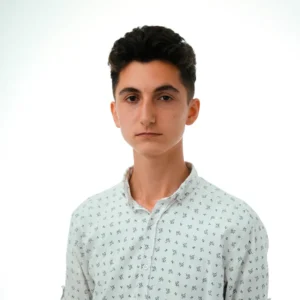
My name is Abdullah Samie. I am originally from Idlib, Syria, and live in Reyhanli, Türkiye. I’ve been living here for approximately eight years.

My name is Abdullah Samie. I am originally from Idlib, Syria, and live in Reyhanli, Türkiye. I’ve been living here for approximately eight years.

I came to Türkiye with my uncles. Because of a difficult situation back home, my father had to come to Turkiye first.  Shortly after, my uncles followed, and then my mother, my two sisters, and I made our way to Reyhanli.

I remember the journey vividly. We traveled from Idlib to Lattakia, which was particularly challenging because Idlib had become a military zone. At every checkpoint, we had to pay money to proceed. There were moments when we had to pretend to be asleep in the car as we crossed to avoid suspicion.

One incident sticks out in my memory. At a checkpoint zone, the soldiers questioned my mother about our whereabouts. When the soldiers noticed my aunt, who was only about 10 or 12 years old at the time, they asked her to get out of the car and said she couldn’t pass. The driver had to give them money to let us go. We finally got to Lattakia, where we left my aunt with our relatives and continued to Turkiye.

Our neighborhood in Idlib was called Al-Same. I have fond memories of playing with my friends in the area. There was a place with trucks we used to call the ferry where we would play for hours. Those were beautiful times filled with joy and freedom.

Now, I am in the final stages of my baccalaureate education. I’ve missed a year of school while migrating to Turkiye. I’ve always been interested in studying software engineering. Initially, I didn’t think much about it, but my interest grew as I saw how things worked.

I came across Karam House, a place that played a significant role in my life. Before joining Karam House, I learned a lot on my own. I took part in a computer basics course at my school and realized I needed more advanced knowledge.

Eventually, I registered at Karam House. The support and resources I found there were incredible. The discussions with mentors, brainstorming sessions, and collaborative projects were all invaluable experiences.

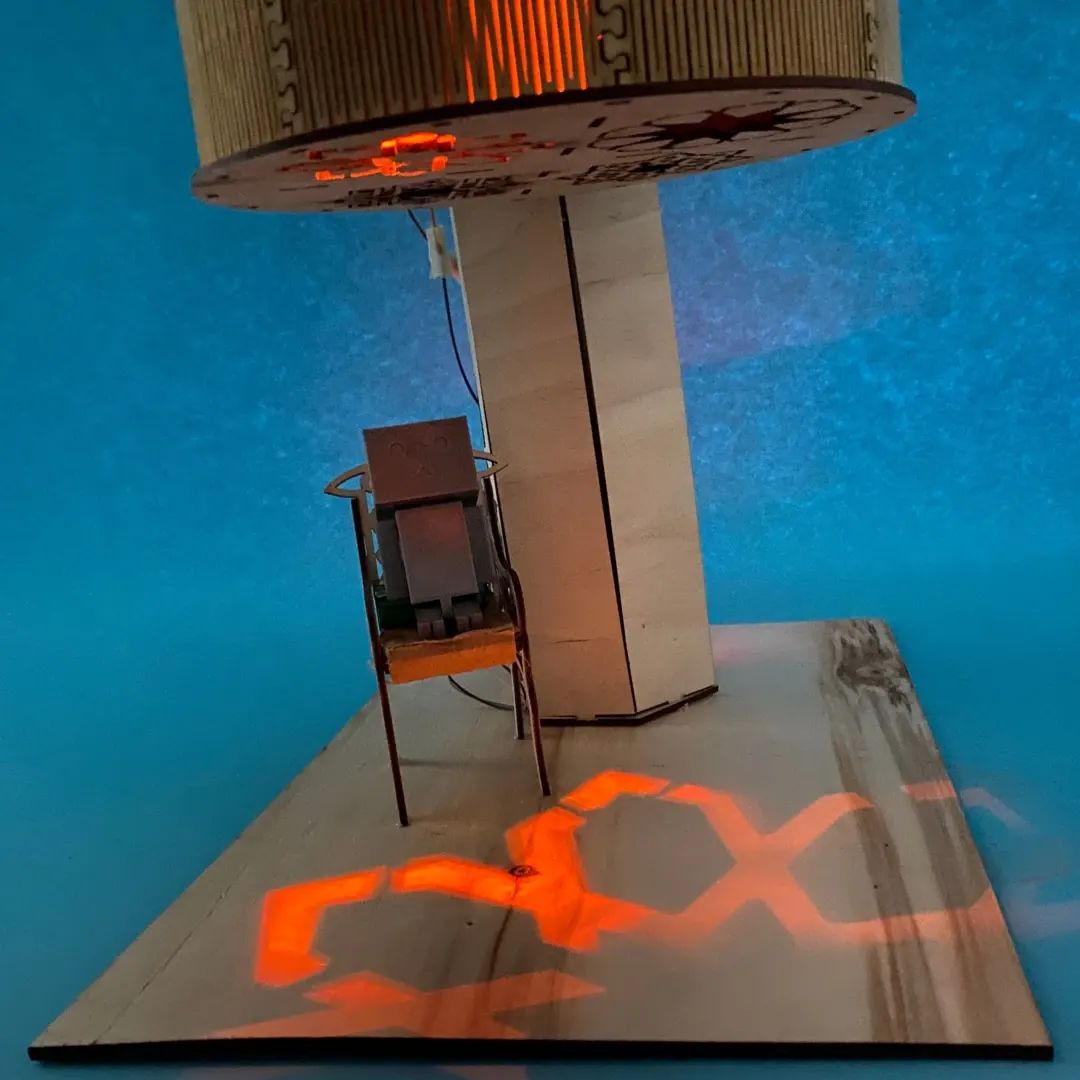
One of the projects I worked on at Karam House was “Tree of Knowledge.” The goal of this project was to introduce Islamic culture around the world through light and integration between societies. We started by sketching the lamp post and the mechanics behind how the light would work. Then, we made a prototype. After that, we designed it on Rhino, printed the pieces on a 3D printer, and assembled them together.

A light-up model made by Abdullah Sammei

One of my favorite moments was presenting my project during final studio sessions. I remember seeing other presentations and feeling motivated to improve mine. This drive to excel and the sense of community at Karam House has truly changed my personality, boosting my self-confidence and mental clarity.

Graduating from Karam House felt like a significant achievement. I am grateful for the opportunity to volunteer there and continue sharing ideas and learning.