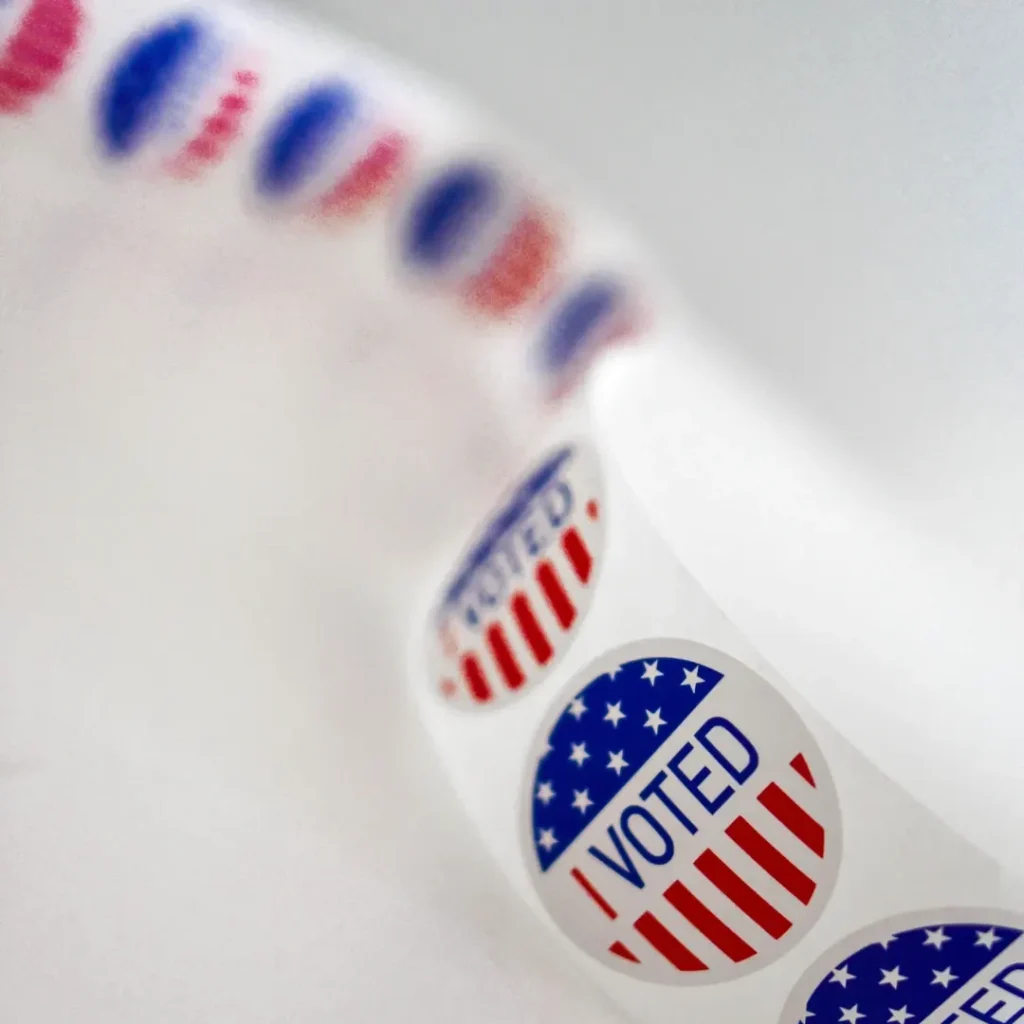
As Election Day approaches in the U.S., we at Karam have spent time reflecting on our reasons for voting and the meaning of democracy. Refugees across the world were forced to flee after fighting for their voices to be heard, and many do not have the right to vote in their host countries. I sat down with a member of our team in the U.S. to understand what this election means to her.
What is driving you to the polls this year? In other words, why are you voting?
I am voting because I really believe it is my duty to vote. I am holding myself accountable to expectations that are required of citizens in a democracy— participation. If we don’t participate, we are not playing an active role (or a role at all) in realizing what our system of government should be doing and is able to do. I want to hold those in power accountable for their decisions and actions, but I believe I need to hold myself to account, as well. I am also voting because there are so many issues at stake that have a direct impact on the future of this country for my 16-month-old baby girl, Emissa. I want her to live in a country where she feels she belongs, can contribute to, and is built on a foundation of justice and equity for all.
How has your view of political action changed over time?
My view of political action over time has definitely evolved. At times, I felt as though my engagement could literally change the world, and then at times, I felt as though I was stuck—that the powers that be were too overwhelming for any concrete change to take place. My first experience with political action and organizing came when the Syrian revolution began. I thought if we had the right message, advocated to the right people, and had a just cause, then what we wanted to achieve would eventually happen. Unfortunately, that wasn’t the case. I felt broken and gave up. I saw no place for political action. I felt that, even though the US was my home, I was being betrayed by the country that I loved. That led to a level of disengagement that I am not very proud of.
I think what Syria taught me is that there are so many factors that can lead to political action and change. It is our duty to do our part to the best of our ability. I know that there are systems that need to be dismantled and changed, and that many things must come together in order for these changes to happen, but if I don’t do my part to act, then I am not fulfilling my responsibility towards that cause I am truly passionate about.
How can we use our political and social power to spread it to those to whom it has been denied?
This is not an easy question nor do I have an easy answer. But I do think there is first and foremost power in honoring those who are denied these rights by participating in the opportunities that we have in front of us. Recognizing that these are rights that people literally die for and then doing something with that recognition is the first way that we can use our political and social power to spread it. By doing so, our message to those in power is that we will not be silent—we will mobilize, organize, and share our experiences and resources across borders to support one another in our individual struggles.
What’s your vision of a just world?
A just world is one where the circumstances of your birth—be it geography, race, class, gender—does not determine your life trajectory.
We encourage you to envision your own just world and to vote to make it happen. Your vote makes a difference by telling those in power what future you think this nation deserves.