Having dedicated over a decade to serving displaced and vulnerable families, Essam Abu Laban offers a rare, firsthand look into the evolution of our mission, from the early days of when food distributions had to be carried out in secrecy under the previous regime, to our current efforts on the ground. Through his eyes, we see the meticulous care taken to identify those in need, the profound dignity of the families we serve, and the quiet, life-changing moments of joy that define our work during the holy month of Ramadan and beyond. Here is a closer look at Essam’s work and the moments that shape these efforts every day.
KF: Tell us who you are, where you are from, and what you do at Karam.
Essam: I am Essam Abu Laban. I am a Palestinian national born in Syria. I currently serve as the Deputy Chairman of Beit Karam in Syria.
KF: When did you start working with Karam?
Essam: We started our work more than 10 years ago, during the previous regime. Back then, we had to work in secret because we weren’t allowed to support families directly; the government required us to hand over funds to them, but we knew that money would be stolen. I worked nightly to ensure that financial support reached the families safely. This was all with the support of Karam’s CEO, Lina Sergie Attar, and her father, Dr. Ali Sergie.
KF: What are some of the initiatives you do with Karam?
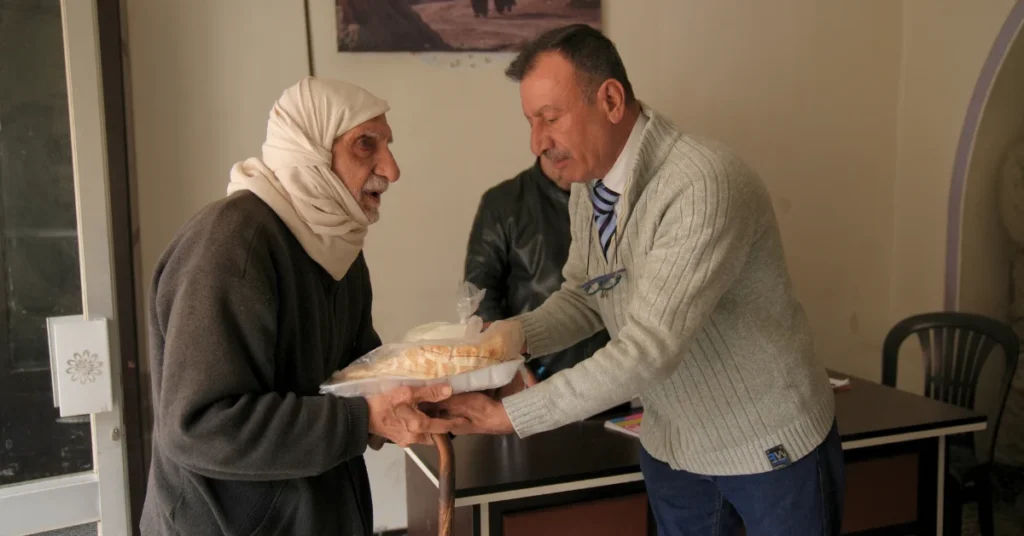
Essam: We started Mawa2ed Ramadan, which means Ramadan Tables. We distribute hot meals for vulnerable displaced families during Ramadan.
KF: How do you find families to support during Ramadan?
Essam: We use a specific system to identify those in need, such as widows and orphans. We usually choose areas with poor infrastructure. Then, I personally visit their homes to assess their situation. One of my methods is to glance into the kitchen; if I notice that they lack basic appliances, like a washing machine, or if their fridge is empty, they are immediately registered for assistance.
We also support other kinds of families, those who were once well-off but lost everything to the war. They are often too dignified to ask for help, so we approach them with extreme dignity and respect, presenting our support as an act of love rather than charity.
KF: What is the impact of donors’ support on these families?
Essam: The impact is profound. The donors should know that the poor and needy people they help are praying for them every single day. These prayers are for the donors’ health, blessings, and continued strength, and I truly believe God accepts these sincere prayers.
KF: Is there a specific memory that stays with you?
Essam: Yes, I remember a time when we were measuring a little girl for new clothes. She was only two or three years old. She was so happy that she turned around with the biggest smile on her face, completely catching us off guard. That moment of pure joy from such a young child is something that never leaves my mind.
KF: Why is your work during Ramadan so significant?
Essam: While we provide support year-round, Ramadan is the month of kindness and generosity. In Syria, poverty is widespread, and there are families who wait all year for the meat we distribute during this time. It is a vital period for us from a religious, moral, and social perspective.
KF: What are your hopes for the future of Karam?
Essam: I hope that the foundation continues to grow stronger and expands its support for Beit Karam in Syria. We have an excellent team that works from the heart, and I look forward to continuous development and more good things to come.