It’s been seven years since the chemical weapons attack on Ghouta which suffocated over 1400 people in one night. I will never forget that wretched night watching as the photos, videos, and messages streamed in on our phones — countless dead bodies lined up in basements and frantic doctors rushing to treat people with foaming mouths. I’ll always be haunted by the rows of children who looked like porcelain dolls with glassy eyes. President Obama referenced these images a few days after the attack in his famous speech in which he said there was a red line against gassing civilians and that it had been crossed and that there would be consequences. Since then, the Assad regime crossed this red line many, many times. And there were no consequences. But that’s another story.
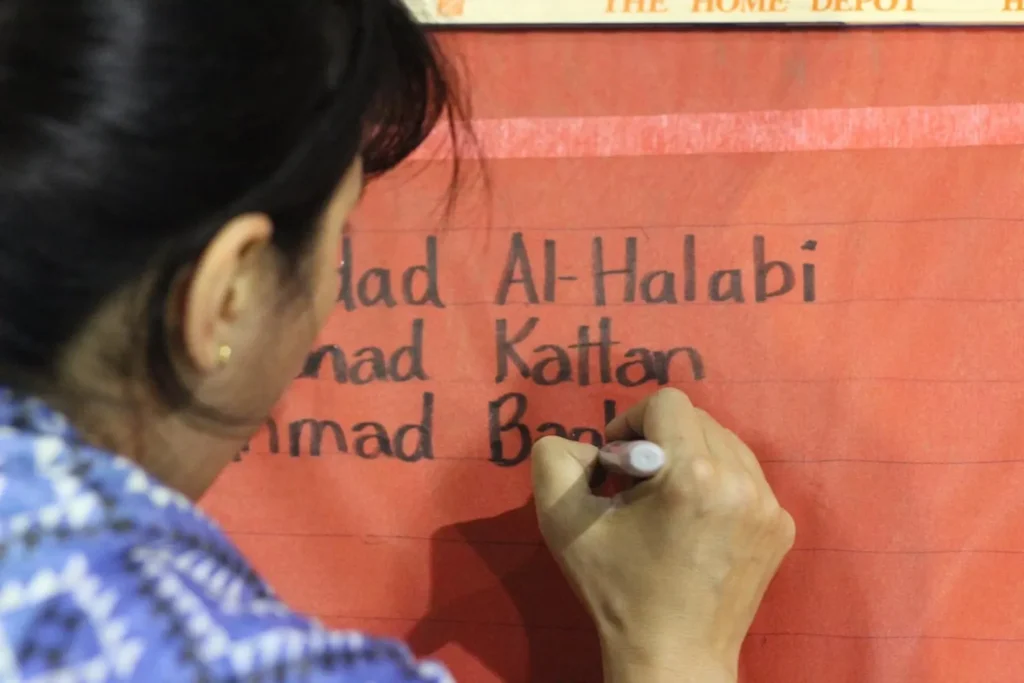
A year after the attack, to mark the first anniversary of the Ghouta massacre, we made this long red line banner, lined with all the names of the dead. We made 426 neon yellow coffins to represent the children who had choked to death. I’ll never forget the all-nighter we spent preparing drawing the lines, writing the names, spray painting the cardboard. That August day, in front of the White House, we stretched the red banner open. It floated in the wind., almost poetic. We lined up the child-sized coffins. And we read the names of the dead.
Today, the massive red scroll of 1429 names with its frayed edges lives in a heap in my basement. Up until a few years ago, I used to open the banner a bit and imagined it hanging in its proper future home — a museum or memorial that would be dedicated to the Syrian people we lost in this ruthless war. After the war was over and Syria was free of the tyrant and all the criminals. That sentiment, filled with worthless hope, slowly extinguished year by year. I’ve avoided looking at the banner for a long time now. It reminds me too much of that naive and painful time when we thought we would change the world just by declaring the truth loud enough for everyone to hear.
We were wrong. But not completely.
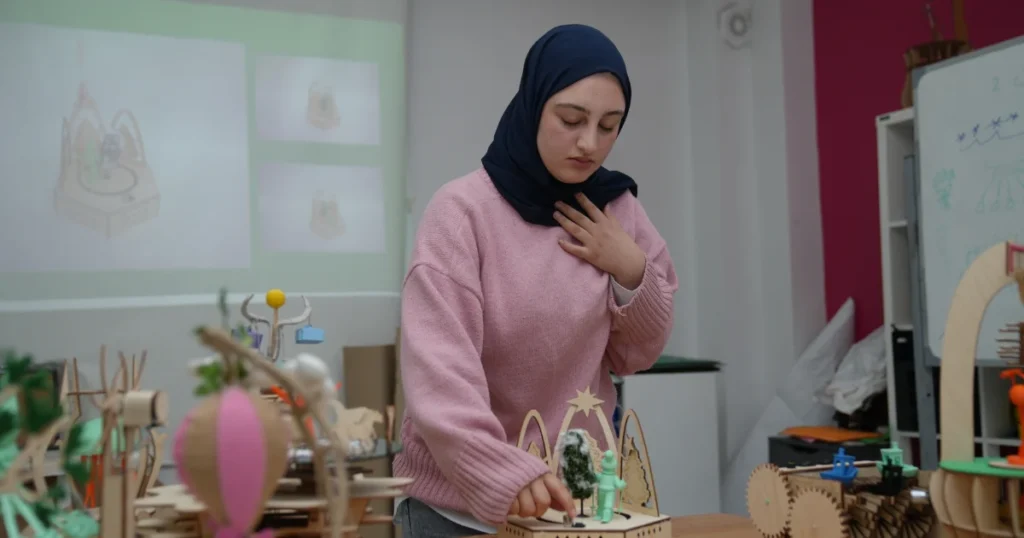
Since 2013, I’ve met some of the chemical weapons survivors who are now refugees in Istanbul. There’s the brave, young mother of three who fled to Turkey with her family. They’ve recovered from the respiratory illnesses from that night. She went back to university to complete her degree. There’s the bright teenager who started the first technology club at his Turkish school. There’s the brilliant graphic designer on our team who spent many days and nights in underground shelters in Ghouta, literally mapping a new future of cities and towns on paper while his community suffered through the siege. These are just a few of the ones I know. There are many more. More than we can count.
And the people who stood in front of the White House? We’re still here. Still fighting for freedom and dignity for Syria. We may be quieter in our ways, but the work continues.
Whether it’s a police knee on your neck, or barrel bombs filled with sarin dropped by your government on your sleeping children, or a massive blast of hundreds of tons of ammonium nitrate that shatters a city in seconds, it seems that every power around us is chanting in our ears: your life is worthless. You don’t deserve to exist. To breathe.
And still. We breathe. We remember. We move forward. And on most days, we try to feel worthy of this life that we have. But on nights like tonight, it’s hard to not wonder why we were the ones who survived.