Did you know that there are six religions other than Islam that require fasting? Here are the religions and their ways of fasting:
- Judaism: Every year, there are six days during which observant Jews fast. They are divided into two “Major fasts” and “Minor fasts”. “Major Fasts” is when Jews fast for 25 hours in commemoration of the destruction of the Holy Temple in Jerusalem. “Minor Fasts” is when Jews fast from sunrise to sunset. Yom Kippur is the holiest day of the year in Judaism. “The purpose of Yom Kippur is to effect individual and collective purification by the practice of forgiveness of the sins of others and by sincere repentance for one’s own sins against God.”
- Buddhism: Buddhists generally fast from noon to dawn of the following day. The fasting depends on their preference and schedule. Fasting in Buddhism started when The Buddha, who was born Siddhartha Gautama in Nepal in 560 VS, meditated and fasted under a tree. He remained under the tree until he achieved enlightenment and founded the Buddhist religion.
- Catholicism: Catholics fast on Ash Wednesday and Good Friday. They also abstain from meat on all Fridays in Lent. Ash Wednesday is a solemn reminder of human mortality and the need for reconciliation with God. It marks the beginning of the penitential Lenten season. Good Friday is the Friday before Easter. It is the day that Christians annually observe the commemoration of the Crucifixion of Jesus Christ. On Ash Wednesday, Good Friday, and all Fridays of Lent, everyone of ages 14 and up must abstain from consuming meat.
- Hinduism: In Hinduism, fasting is commonly practiced on new moon days and during festivals such as Shivaratri, Saraswati, and Puja. There are different ways of practicing fasting in Hinduism. One is not partaking in any food or water for a set number of days, limiting oneself to one specific vegetarian meal during the day, or eating or drinking only certain types of food for a set number of days.
- Mormons: Members of the Latter Day Saint movement, Mormons fast on the first Sunday of each month. Members are asked to go without food and drink for two consecutive meals, or approximately 24 hours.
- Baha’is: The Baha’is fast takes place during Ala – the 19th month of the Baha’i year, from March 2nd to 20th. Baha’is practice fasting as a discipline for the soul; they see abstaining from food as an outer symbol of a spiritual fast.
And finally, Muslims around the world fast for Ramadan from sunrise to sunset. Muslims believe fasting teaches them to practice self-discipline, self-control, sacrifice, and empathy for those who are less fortunate.
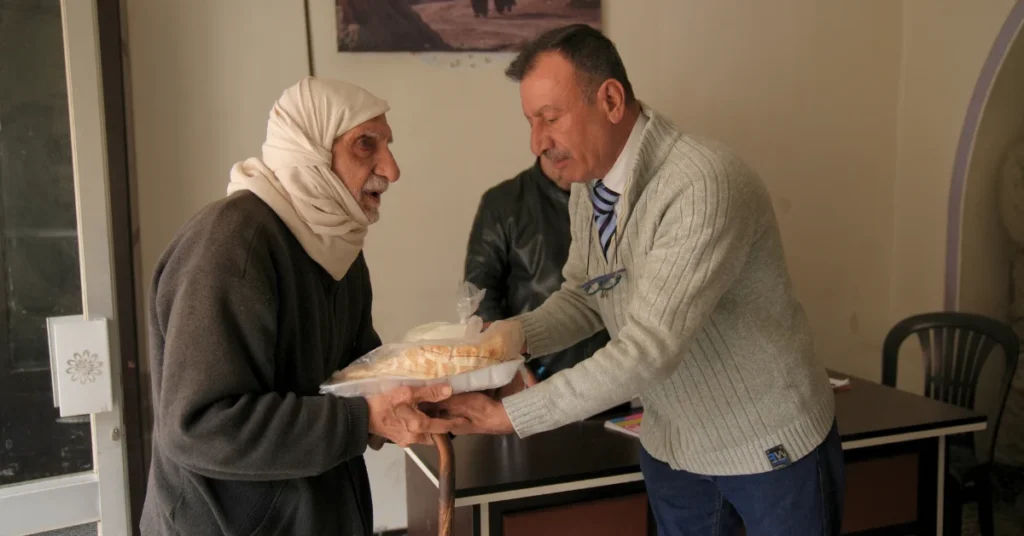
This April, we are launching our Ramadan Campaign, Ramadan Spreads, to raise money for Syrian refugee families. We will provide them with gift cards, to buy the food they need during the holy month of Ramadan. Join us in supporting those families, by donating to our campaign.