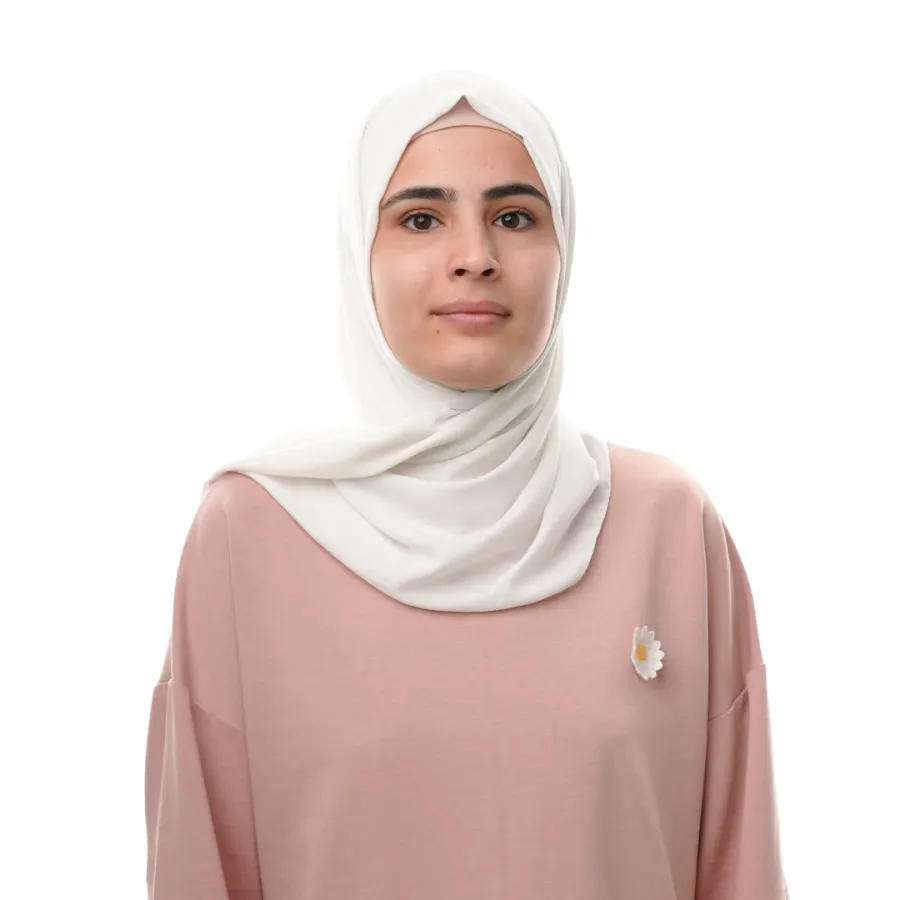
I’m Nassim Sabti; I’m 17 years old and in 11th grade. I am currently living in Reyhanli, Turkiye, with my family. I’m originally from Homs, Syria; my life took a drastic turn at the age of seven when the Syrian conflict forced me and my family to flee.
A Journey of Resilience
One night in Homs, we were awoken by the deafening noise of a rocket hitting our neighbor’s house. We were so scared and couldn’t go back to sleep that night; we didn’t know if another one was going to hit us. That was the moment my mother decided it was time to leave Syria. With only my mother and five sisters, we headed north, eventually crossing the border into Turkiye, leaving behind a home. Despite the hardship, my dream of becoming an ophthalmologist or engineer in the future was one of the few things I took with me from Homs.
When I first arrived in Turkiye, we were enrolled in a Turkish school. There was a language barrier to begin with, and to make things even more difficult; I faced discrimination just for being Syrian. Teachers yelled at me; students pulled my hijab. Even basic needs like going to the bathroom were denied, with threats to give me a bad grade if I dared. One day, my urgency outweighed the fear of consequences, and I stood up for myself. Frustrated with the mistreatment, my uncle made the decision to transfer us to Al Qaria School, a haven for Syrian girls.
Discovering Karam House
I learned about Karam House from my uncle, and with the desire to learn, connect with people, and adjust to life in Turkiye, we joined the Karam Families program. As soon as I was eligible, I eagerly became a part of Karam Studios at the age of 13. Over four transformative years, Karam House has become not just a learning space but a second home, providing me with a supportive community and a platform to explore my passions.
Overcoming Language Barriers
Navigating a new language presented its challenges, but my uncle recognized its importance. Enrolling in a Turkish institute, I gradually mastered the language, opening doors to better integration.
Family and Culinary Skills
I lost my father to the war when I was six years old, and my mother passed away about five years ago. Now, I live with my grandmother, my five sisters, and two uncles, including my uncle Hamza, who has been our anchor. A moment of pride for me was stepping up to cook for the family when my grandmother fell ill. Cooking, a newfound hobby, allowed me to express my determination through dishes like Kabseh and cake.
Deep Sea Bots and Innovation
My favorite studio at Karam House, “Deep Sea Bots,” became a turning point in my journey. Collaborating with my studio partner, Mohamad Ghandoura, we created “Creeto the Savior,” a robot inspired by the pufferfish designed to rescue people during natural disasters. The challenging brainstorming process ignited my dedication and unleashed my creativity.
Karam House: A Safe Haven
My journey at Karam House goes beyond learning skills; it’s about finding a safe haven. The supportive environment, dedicated mentors, and inspiring team at Karam House have reshaped my life.
To those facing challenges, I say, be strong, be confident, know your goals, and pursue them relentlessly. Karam House changed my life. From computer skills to Arabic development, Karam House has been the catalyst for my personal and academic growth.
As I approach graduation in 2024, my mission is to carry the spirit of Karam House with me, sharing the remarkable impact it had on my life and inspiring others to overcome challenges with strength and determination.
More stories
Mahmud Mardini
Thank you from the bottom of my heart
At age 15 Mahmud left Syria with his two older brothers, sister, and parents. They went in pursuit of safety and a better future, leaving behind everything they had already lost. Yemen was their first stop. His dad had worked at the Yemeni Embassy in Syria, so it was safe for them to enter the country. Shortly after their move to Yemen, his father passed away, leaving the family on their own to figure out how they could survive. They opened a restaurant and lost everything seven months later when the war in Yemen began.
At age 15 Mahmud left Syria with his two older brothers, sister, and parents. They went in pursuit of safety and a better future, leaving behind everything they had already lost. Yemen was their first stop. His dad had worked at the Yemeni Embassy in Syria, so it was safe for them to enter the country. Shortly after their move to Yemen, his father passed away, leaving the family on their own to figure out how they could survive. They opened a restaurant and lost everything seven months later when the war in Yemen began.
Their next stop was Turkey. They had nothing, having lost everything in both Syria and Yemen. Mahmud was still under 18 years old, so he went back to Syria with his mother in hopes that they could rebuild what they had lost, and that he could go back to school. The dream turned out to be just a dream. While in Syria, Mahmud was arrested twice, and their neighborhood was under attack and bombing. As more and more of his friend left, the stress of an unknown future caught up to him.
Education was important to Mahmud. He was determined to study, but it was hard for him because he had lost all of the papers to certify his previous school performance and status. His dream was to go study in Europe, so he worked hard and made it to Germany in 2016, where he got his residency papers and learned the language. While in Germany, he stayed with a German family who hosted him while he attended school. Things were tough there: Syrian refugees were – and are – faced with a lot of racism and discrimination, adding pressure on what he had already been through.
One day, the German family’s house started on fire. Mahmud had to go live somewhere else and ended up living with a friend of that same family.
The stress and loss took their toll and led him to have not one but two strokes, hospitalizing him at such a young age. They were his wake-up call — the sign that it was time to go be with his family. So he returned to Turkey in 2017.
That’s where everything began to change for the better. He learned the Turkish language. He then faced the Açık öğretim test with a 98%, granting him a high school diploma and the ability to enroll in the university.
He first got into the Management Information Systems Department, and a year later due to his high grades, he was able to transition to Computer Engineering and start fresh.
Despite being new to the country and one of three foreign students in this department, he became the educational coordinator of the innovation and software club. After five months of organizing events in engineering and coding, the president of the department asked him to be the president of the club.
The following year he was nominated to be the department representative in the university. He got his Turkish citizenship around that same time. Things were looking up for Mahmud.
When the world shut down from the Covid-19 pandemic, he was going to school online, taking online courses from American universities, and working as a freelance web developer for companies all around the world, such as Palestine, Turkey, and even the U.S.
In his final year of college, he joined a Bootcamp at Trendyol, the company he currently works at. Trendyol is the Turkish equivalent of Amazon, with branches all over the world. During that summer’s Bootcamp, only 40 out of 2,000 applicants were moved on to the next phase. Only 20 of them were hired. Mahmud was one of them.
He was both the first foreigner and Syrian to join the Trendyol team, and the first to have joined before graduating and without previous work experience. He worked hard for what he got.
Before Trendyol, Mahmud was a Karam Scholar, working hard towards his degree and the betterment of his community. He learned about the scholarship through an ad on social media. He was very careful and attentive to details while filling out his application. He was working in tourism, but it was taking a toll on his studies and grades. When he was accepted into the program, he was very happy because it helped him to focus on school.
He loves the Karam Scholarship, not only for the financial help, but for the social aspect of it, the constant communication, and the mentors always asking about and listening to the Scholars’ problems and difficulties.
When we asked Mahmud where he felt he belonged, he laughed and said, “This is a very difficult question to answer. Maybe there are two places I feel that I belong to, the first one is definitely Damascus where I was born, but because I’m an immigrant, I think the second place will be Canada, because Canada is a country full of immigrants.” Mahmud has neither lived in nor visited Canada. But the stories of his friends who live there lead him to believe that he could feel at home there. He’s heard of how welcoming people are and about the large Syrian community.
Mahmud’s message to Karam is this: “Thank you from the bottom of my heart. I hope that you continue this path and give this opportunity to more Syrian youth because a lot of them are waiting for this opportunity.”
Azari Hamdan
Here I am alive but I am not living
I lived in Syria for 16 years, I remember my neighborhood with all its details. Looking back, I lived a very happy life but I wasn’t aware of it. When one loses these blessings, it is when they realize that they had them.
I lived in Syria for 16 years, I remember my neighborhood with all its details. Looking back, I lived a very happy life but I wasn’t aware of it. When one loses these blessings, it is when they realize that they had them.
I used to always wish that I could leave Syria and go to another country. I would even nag my mom. Now I sometimes see jasmine on the street, and I remember the jasmine tree that we had at our house in Syria and how I used to be unaware of its beauty. Now that I’ve left, I’ve begun to remember even the smallest details. Before? I never did.
I came to Reyhanli, Turkey at the end of 2016. The journey from Syria to Turkey was a disaster. We left our hometown of Douma because of the siege and went to our grandparent’s house in Deir Ezzor. But then ISIS came there. When ISIS entered the city, the first thing they did was ban school attendance. Immediately after, my mom decided that it is best to leave for Turkey. As we were getting ready to leave, ISIS forbade traveling to “disbelieving countries.” So we stayed for another year before we paid a smuggler to take us from Deir Ezzor to Idlib. However, on our way there, ISIS captured us.
When ISIS found us, we were scared for our lives. They asked us where we are going and why. We told them we are going to Turkey. This is when they took my sister’s husband. We couldn’t predict what was going to happen, but they ended up separating men from women. They took us to a house in Aleppo, and we stayed there for a day until a group of women and men came in the middle of the night and opened our bags to search them, but they did not find anything. Then, they told us we could go.
We were afraid of getting captured, so we decided to go back to Deir Ezzor, but my sister’s husband refused. He said he will find us another smuggler. We did, and everything went smoothly. We reached Idlib and there were mountains everywhere. When we reached the Turkish border, there was another mountain to cross to reach the other side. I said it was impossible to do so. Then, it turned out to be very easy, especially compared to what other people have going through. On our way to the Turkish border, we met people who had said this was their fifth time trying to cross, but they kept getting sent back to Syria. That’s when I knew that this might happen to us as well.
We left Idlib at 5:00 AM and got to Turkey at 8:00 AM. The entire journey took us ten days. We were able to pass through without the Turks saying anything.
During the Journey, my main concern was my mother. She was 47 years old then and it was a hard trip. I lost my dad to a car accident 18 years ago when my mother was pregnant with me, so she was all on her own.
When we first arrived in Reyhanli, I never used to leave the house because of what we had to endure under ISIS rule in Deir Ezzor. I still remember hearing them slaughtering people right outside the house. One time I heard them kill a man who missed a prayer. I was impacted by this because some of the people who were killed were people I knew. When I came to Reyhanli, it was a whole different world, a world where people had no idea what was happening a few miles away in Syria. Here I am alive but I am not living. People in Syria are still being slaughtered, it’s happening now. I feel it, I still hear it. If I was in Syria now I wouldn’t be alive. It’s painful —I don’t even know how to describe it.
New Beginnings and New challenges
We had been living in Turkey for three months when my sister and I decided to register for a Turkish course. Unfortunately, there was only one spot left, so I gave it to my sister. She was in her Baccalaureate year, and it made more sense for her to take the class. Coincidentally, they opened up another course and it was free. However, my mom told me to wait but I did not want to so I registered. A few days into the Turkish class, I met Mr. Amir and Miss Hamsa from Karam House. They told us about the studios they offer and the Innovative Education program they have. It sounded interesting but I did not register because I hadn’t even considered it then.
When I started coming to Karam House, it had been my dream to study engineering, since I was little. But when I began working on projects at Karam’s Studios, I realized that I did not like engineering that much. I did not know what I wanted to do. But, my sister came to me and told me that our father, may he rest in peace, wanted one of us to become a doctor. All of my older sisters studied literature, and are now teachers, but I always had a tendency towards the sciences, so I decided to study medicine and make my father’s wish come true. It’s a humane and brave field. I am terrified of blood, but I also believe that when you are afraid of something, you have to go and do that same thing to break down the barriers.
I am a very shy person. I get nervous speaking in front of people. However, after joining Karam my personality changed a lot, I learned about responsibility, and I became more dependent on myself.
Refugees Helping Refugees
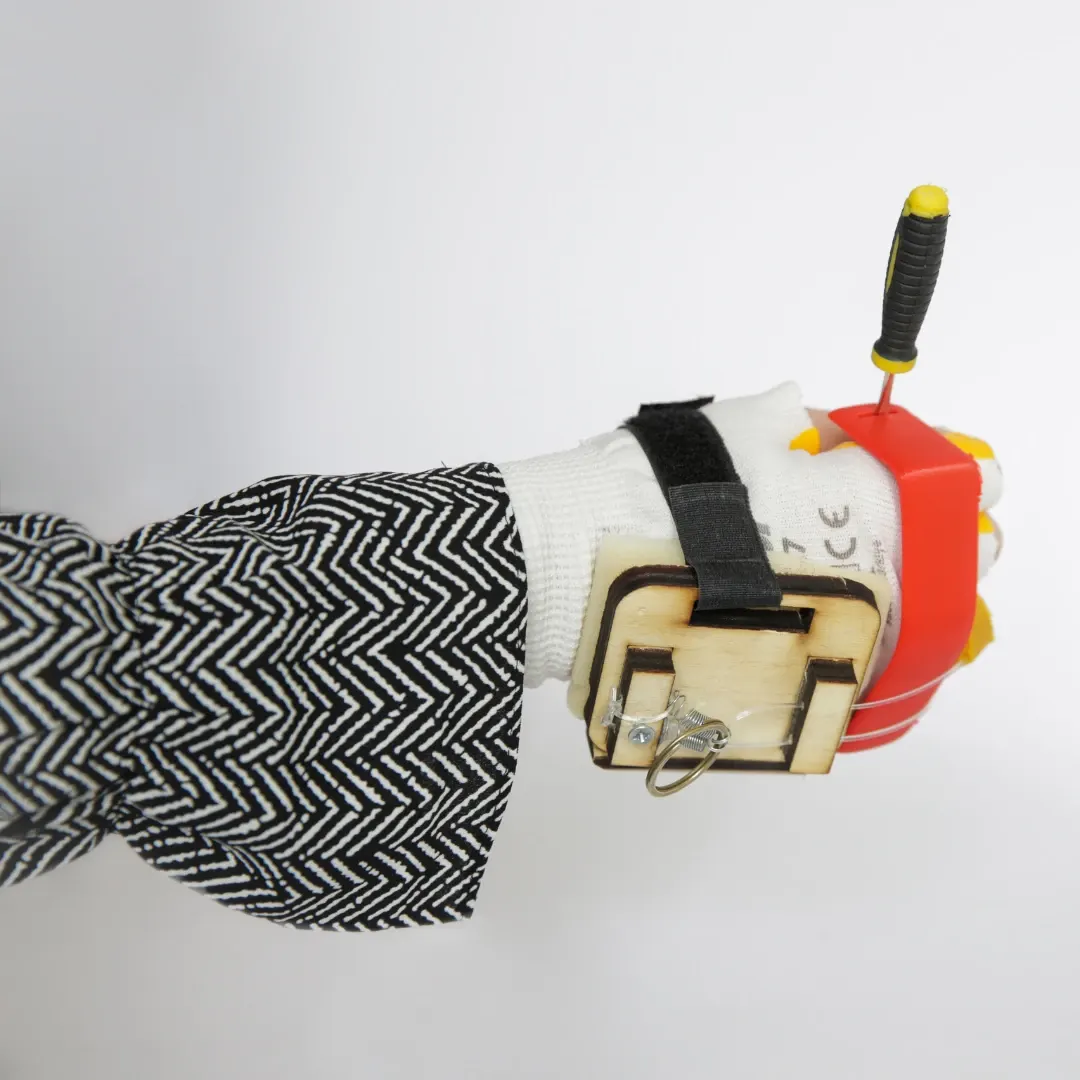
The first project I worked on was in a prosthetic workshop. We had consultants who were disabled and needed a prosthetic limb. The idea was to make a prosthetic that was innovative yet simple because prosthetic limbs are expensive. We wanted to make something complicated out of simple materials.
Coincidentally, the case they assigned to me, turned out to be someone from my city — from Douma — and I liked this. I was really happy when the mentors assigned Mohammed’s case to us. Yes, it’s true that we are all Syrian and that we are all one, but I feel that the people from Damascus understand me. They understand my customs, so I was excited to work on his case. But in the beginning, I hesitated. I felt like I was going to withdraw from the workshop. I didn’t think I could give them hope in something that may not turn out correct.
We were working on this project with our NuVu Partners in the United States. They worked on the same case but made a different prosthetic for Mohammed: they assigned them the left hand, and us the right hand. We met with them every week online, and we would see what they did and show what we had completed. We would do this every week, and show each other our progress.
The first time we went to the center to meet our consultant for the first time, I was shocked. When I met Mohamad, he spoke about his hand saying that it was in 2014, a fragment ricocheted into his head, and this fragment caused brain spasms. The result was a lack of movement in his left hand and partial movement in his right; he had limited movement in three of his fingers: ring, middle, and pinky.
As we got to know Mohamad, he said that his hobbies are writing, learning English and Turkish, and photography. So, our idea for his prosthetic came from the fact that we wanted his fingers to move. We began our research on the internet to find other projects and get inspiration, most of the projects we found had a mechanical aspect to them, and I am not good at mechanics. After a long time of researching, we knew that it would be impossible to make his hand move without electronics, he would need power or something similar to make it work. Therefore, we settled on the mechanical idea and began our learning and trying process. It took us 15 weeks of trying and re-trying, we did all that we could do and kept wondering; is it going to work or not?!
Final Results of the Project
The project ended up being an expression of the palm wearing a vest — the idea was that it would strengthen the three fingers on his right hand so that he could move them. If he wanted to hold something, he couldn’t. If they opened, he could hold things. The project consisted of three parts: the wrist, the hand, and the fingers.
We started by making a prototype from cardboard and then once we had everything set we Rhino Fusion, this was my first time working with Fusion. I learned quickly and was able to finish this project.
Before starting this workshop, I would wake up in the morning very sad, not knowing why. But now after I created this project, I wake up every day and thank God for my health, and for all the opportunities I had like going to school and joining Studios such as the Prosthetic workshop.
Once everything was set and ready, we used the 3D printer to print the project. It took us a few tries before we got the exact measurements needed. I felt so proud and satisfied with the final result.
I don’t want to say we’ve given him hope, but at least we tried. What is that phrase? I didn’t feel that we could have failed because, in the end, we tried. Even if we failed, there was honor in trying.