Your name is part of your identity, part of who you are, and how you first introduce yourself.
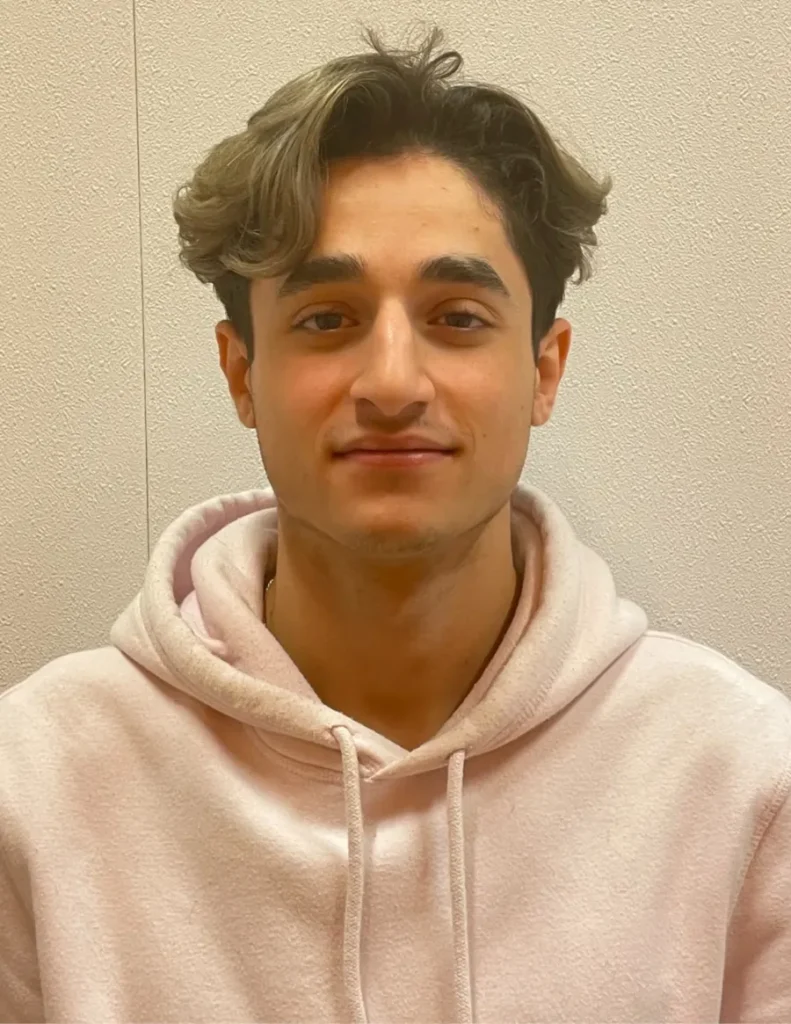
When I first spoke to Husam, he introduced himself as Sam, and when I asked him why he changed his name he said: “I started going by Sam back in 2019, mainly because I started meeting some foreign people and it was easier for them to say Sam, but I still was in a mostly Arabic community and most people called me Husam. Now that I live in the Netherlands, Husam is even harder for people to say, so Sam was easier. Plus, I feel like the name Sam fits me better than Husam Eddin.”
Sam left Syria at nine years old, carrying with him his country, his given name, and a handful of memories. From one country to another, Sam and his family went on a search for a place they can call home.
After spending three years in a small town in Jordan, Sam and his family moved to Turkey in 2015 to start a new life. In Turkey, he learned English and Turkish and met a lot of different people who he later called friends.
In 2019, Sam’s father left Turkey and moved to the Netherlands, and two years later, they followed him there.
During their time in Turkey, Sam joined Karam House, a place he called “special.” “Sure, at Karam I learned the dynamics of how to think like a successful entrepreneur or how to capture a scene as a true film director would, but I also learned about myself. I feel like I can make a difference not just in my own personal life, but in the world.”
Sam became interested in filmmaking at the age of 15. “I saved up money from my allowance and bought my first-ever computer. I downloaded editing software and started filming and editing my own videos. But I never got to publish them anywhere.”
Taking studios at Karam House strengthened Sam’s knowledge of filmmaking, “At Karam House, it became more of a storytelling. It made my passion stronger for filmmaking.
Now I can make someone feel something or hear someone’s story in one minute. Make someone feel emotion through a piece of content that is not necessarily a big Hollywood movie, just a kid with a camera.”
Currently, Sam is learning Dutch and taking preparation courses for college. Because of his constant move from one country to another, school in the Netherlands refused his papers, leaving Sam defeated. But he gathered his portfolio with all the studios he had completed at Karam House and shared what he had learned and the skills he had gained. “They were very impressed with the work that I’ve done at Karam House, that after denying me, they decided to enroll me. I got into school because I had a Karam House diploma.”
Sam said that Karam is an important part of his life. There, he met many friends and they became best friends despite the distance. “Karam House put me in a community I’ve been searching for. A community that I fit in. I am a creative person and wanted to be around creative people.”
Giving back to the community is very important to Sam. When he finally settled in the Netherlands, he volunteered at an Asylum Center, De vrolijkheid, which is the first stop for refugees when they arrive in the country. He wanted to make the youth at the center feel seen and important because their stories mattered. He volunteered with a group of people including a Dutch filmmaker where they made a video with the young adults. “The idea behind it was for them to make a video about their lives, what they do, and what it meant to be a refugee in the asylum center.” The short film was called Glow in The Dark, and it premiered in local cinemas.
For the young men and women who are going through or have gone through similar experiences as Sam, he wants to say, “Yes, it’s hard, I know, and whatever you’re trying to do may seem impossible, but due to our circumstances, we have to work twice as hard— maybe more. Maybe it’s not fair, but that’s just the way it is. Whether that is by learning a completely new language or having to adjust to new cultures and places. In the end, you can find yourself within that culture and live the best of both worlds.”
More stories
Amal Al Kurnazi
Despite the hardships, Amal remains determined in her pursuit of education
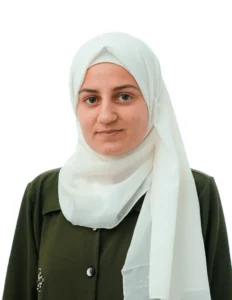
Amal Al Kurnazi, an 18-year-old from Idlib, Syria, is a testament to resilience and determination. Amidst life’s challenges, Amal remains focused on her dreams and aspirations, fueled by her unwavering spirit
Amal Al Kurnazi, an 18-year-old from Idlib, Syria, is a testament to resilience and determination. Amidst life’s challenges, Amal remains focused on her dreams and aspirations, fueled by her unwavering spirit
Amal, a second-year student majoring in nutrition, comes from a family of seven—her parents and five siblings. However, their lives took an unexpected turn when the Turkiye-Syria earthquake struck, leaving her father unemployed. Despite his best efforts to secure any job available, the post-earthquake circumstances left him jobless. The family found themselves grappling with financial instability and uncertainty.
In the midst of adversity, Amal’s commitment to education shines through. Three of her siblings are pursuing college degrees, with one sister studying nutrition alongside Amal and another studying radiation therapy. Education remains a beacon of hope for the Al Kurnazi family, a pathway to a brighter future.
The family has been residing in Reyhanli, Turkiye, for ten years, a decision that was prompted by the harrowing events in their homeland. Amal vividly recalls the fear that overcame her younger sister during the shelling in Idlib. The relentless sound of bombs and the sight of smoke left her sister trembling uncontrollably, forcing the family to make the difficult decision to leave Syria for the sake of their loved ones.
Their journey led them from one village to another within Idlib, seeking refuge from the danger surrounding them. However, safety remained far, and they eventually crossed the border into Turkiye. Tragically, Amal’s nephew, who was in need of urgent medical attention, did not make it after crossing the border.
Despite the hardships, Amal remains determined in her pursuit of education. A 19-hour bus ride from her hometown to her school city every semester is a small price to pay for the knowledge she gains as a college student. Her dedication is not confined to the academic realm; during summers, she works as a kindergarten teacher and a private tutor to alleviate the financial strain on her family.
Amal found out about Karam House through her sister. Drawn by the prospect of building a community and forging connections, Amal found solace and support within the walls of this safe space.
Reflecting on her experience, Amal cherishes every moment spent at Karam House. From creating in the studios to forming lasting friendships, she expresses gratitude for the invaluable lessons learned and the sense of belonging fostered within this community.
For Amal, Karam House is more than a physical space; it is a sanctuary where mentorship extends beyond guidance to become a familial bond. The generosity displayed within its walls aligns seamlessly with its name, creating an environment that fosters growth and support.
One of Amal’s favorite studios and proudest moments was at Animotion. In this studio, students learned the nature of mechanical movements and how to create and develop them by showing appropriate examples that detail the movement, clarifying the places of contact between the parts of other mechanics, and linking them with the movement of different animals. Amal created a butterfly made of paper and hair clips in this studio.
Amal’s appreciation for Karam House extends beyond gratitude; it transforms into a commitment to spread its mission. Her goal is to share the transformative impact of Karam House with everyone she encounters, emphasizing the trust, safety, and sense of home it provides.
As Amal navigates her future, one thing she will take with her from Karam House is how to communicate effectively. Armed with this skill, she looks forward to a future where she can contribute to spreading Karam’s mission, bringing hope and opportunities to others who, like her, are navigating the challenging journey from adversity to achievement.
Azari Hamdan
Here I am alive but I am not living
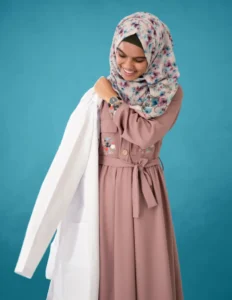
I lived in Syria for 16 years, I remember my neighborhood with all its details. Looking back, I lived a very happy life but I wasn’t aware of it. When one loses these blessings, it is when they realize that they had them.
I lived in Syria for 16 years, I remember my neighborhood with all its details. Looking back, I lived a very happy life but I wasn’t aware of it. When one loses these blessings, it is when they realize that they had them.
I used to always wish that I could leave Syria and go to another country. I would even nag my mom. Now I sometimes see jasmine on the street, and I remember the jasmine tree that we had at our house in Syria and how I used to be unaware of its beauty. Now that I’ve left, I’ve begun to remember even the smallest details. Before? I never did.
I came to Reyhanli, Turkey at the end of 2016. The journey from Syria to Turkey was a disaster. We left our hometown of Douma because of the siege and went to our grandparent’s house in Deir Ezzor. But then ISIS came there. When ISIS entered the city, the first thing they did was ban school attendance. Immediately after, my mom decided that it is best to leave for Turkey. As we were getting ready to leave, ISIS forbade traveling to “disbelieving countries.” So we stayed for another year before we paid a smuggler to take us from Deir Ezzor to Idlib. However, on our way there, ISIS captured us.
When ISIS found us, we were scared for our lives. They asked us where we are going and why. We told them we are going to Turkey. This is when they took my sister’s husband. We couldn’t predict what was going to happen, but they ended up separating men from women. They took us to a house in Aleppo, and we stayed there for a day until a group of women and men came in the middle of the night and opened our bags to search them, but they did not find anything. Then, they told us we could go.
We were afraid of getting captured, so we decided to go back to Deir Ezzor, but my sister’s husband refused. He said he will find us another smuggler. We did, and everything went smoothly. We reached Idlib and there were mountains everywhere. When we reached the Turkish border, there was another mountain to cross to reach the other side. I said it was impossible to do so. Then, it turned out to be very easy, especially compared to what other people have going through. On our way to the Turkish border, we met people who had said this was their fifth time trying to cross, but they kept getting sent back to Syria. That’s when I knew that this might happen to us as well.
We left Idlib at 5:00 AM and got to Turkey at 8:00 AM. The entire journey took us ten days. We were able to pass through without the Turks saying anything.
During the Journey, my main concern was my mother. She was 47 years old then and it was a hard trip. I lost my dad to a car accident 18 years ago when my mother was pregnant with me, so she was all on her own.
When we first arrived in Reyhanli, I never used to leave the house because of what we had to endure under ISIS rule in Deir Ezzor. I still remember hearing them slaughtering people right outside the house. One time I heard them kill a man who missed a prayer. I was impacted by this because some of the people who were killed were people I knew. When I came to Reyhanli, it was a whole different world, a world where people had no idea what was happening a few miles away in Syria. Here I am alive but I am not living. People in Syria are still being slaughtered, it’s happening now. I feel it, I still hear it. If I was in Syria now I wouldn’t be alive. It’s painful —I don’t even know how to describe it.
New Beginnings and New challenges
We had been living in Turkey for three months when my sister and I decided to register for a Turkish course. Unfortunately, there was only one spot left, so I gave it to my sister. She was in her Baccalaureate year, and it made more sense for her to take the class. Coincidentally, they opened up another course and it was free. However, my mom told me to wait but I did not want to so I registered. A few days into the Turkish class, I met Mr. Amir and Miss Hamsa from Karam House. They told us about the studios they offer and the Innovative Education program they have. It sounded interesting but I did not register because I hadn’t even considered it then.
When I started coming to Karam House, it had been my dream to study engineering, since I was little. But when I began working on projects at Karam’s Studios, I realized that I did not like engineering that much. I did not know what I wanted to do. But, my sister came to me and told me that our father, may he rest in peace, wanted one of us to become a doctor. All of my older sisters studied literature, and are now teachers, but I always had a tendency towards the sciences, so I decided to study medicine and make my father’s wish come true. It’s a humane and brave field. I am terrified of blood, but I also believe that when you are afraid of something, you have to go and do that same thing to break down the barriers.
I am a very shy person. I get nervous speaking in front of people. However, after joining Karam my personality changed a lot, I learned about responsibility, and I became more dependent on myself.
Refugees Helping Refugees
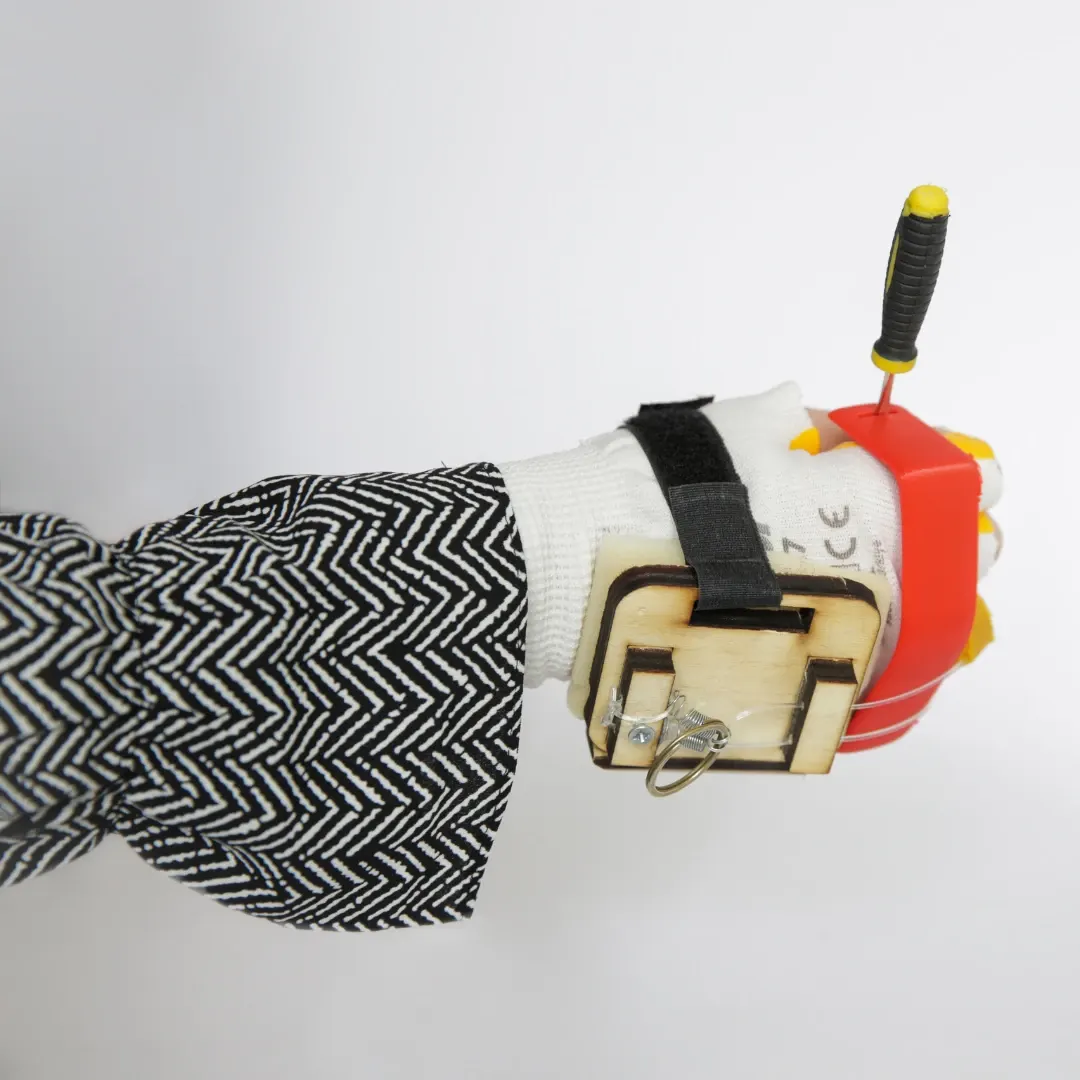
The first project I worked on was in a prosthetic workshop. We had consultants who were disabled and needed a prosthetic limb. The idea was to make a prosthetic that was innovative yet simple because prosthetic limbs are expensive. We wanted to make something complicated out of simple materials.
Coincidentally, the case they assigned to me, turned out to be someone from my city — from Douma — and I liked this. I was really happy when the mentors assigned Mohammed’s case to us. Yes, it’s true that we are all Syrian and that we are all one, but I feel that the people from Damascus understand me. They understand my customs, so I was excited to work on his case. But in the beginning, I hesitated. I felt like I was going to withdraw from the workshop. I didn’t think I could give them hope in something that may not turn out correct.
We were working on this project with our NuVu Partners in the United States. They worked on the same case but made a different prosthetic for Mohammed: they assigned them the left hand, and us the right hand. We met with them every week online, and we would see what they did and show what we had completed. We would do this every week, and show each other our progress.
The first time we went to the center to meet our consultant for the first time, I was shocked. When I met Mohamad, he spoke about his hand saying that it was in 2014, a fragment ricocheted into his head, and this fragment caused brain spasms. The result was a lack of movement in his left hand and partial movement in his right; he had limited movement in three of his fingers: ring, middle, and pinky.
As we got to know Mohamad, he said that his hobbies are writing, learning English and Turkish, and photography. So, our idea for his prosthetic came from the fact that we wanted his fingers to move. We began our research on the internet to find other projects and get inspiration, most of the projects we found had a mechanical aspect to them, and I am not good at mechanics. After a long time of researching, we knew that it would be impossible to make his hand move without electronics, he would need power or something similar to make it work. Therefore, we settled on the mechanical idea and began our learning and trying process. It took us 15 weeks of trying and re-trying, we did all that we could do and kept wondering; is it going to work or not?!
Final Results of the Project
The project ended up being an expression of the palm wearing a vest — the idea was that it would strengthen the three fingers on his right hand so that he could move them. If he wanted to hold something, he couldn’t. If they opened, he could hold things. The project consisted of three parts: the wrist, the hand, and the fingers.
We started by making a prototype from cardboard and then once we had everything set we Rhino Fusion, this was my first time working with Fusion. I learned quickly and was able to finish this project.
Before starting this workshop, I would wake up in the morning very sad, not knowing why. But now after I created this project, I wake up every day and thank God for my health, and for all the opportunities I had like going to school and joining Studios such as the Prosthetic workshop.
Once everything was set and ready, we used the 3D printer to print the project. It took us a few tries before we got the exact measurements needed. I felt so proud and satisfied with the final result.
I don’t want to say we’ve given him hope, but at least we tried. What is that phrase? I didn’t feel that we could have failed because, in the end, we tried. Even if we failed, there was honor in trying.