Suaad Al-Samman, a Karam young leader

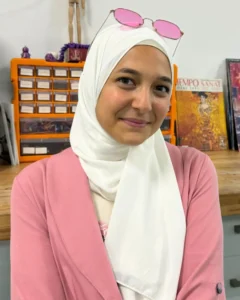
Suaad Al-Samman

I finally felt like I belonged

Ever since the start of the Syrian conflict, my family and I have moved from one place to the next. From our hometown in Damascus, we made our way to Jordan. In Jordan, we moved four times within the country, and each move meant a different school and a new start. It got to the point where I wouldn’t even finish a semester at school before I had to move again.

I was the “new girl” every time, and I think even people who didn’t have to move around know how annoying it is to be in that position.

We finally settled when I was in the second semester of fourth grade. I was so excited to have spent a full semester in one school, and that I was going to graduate to fifth grade with all my friends. Yes, friends. I had friends. Friends who I was so attached to. Kids just like me who saw me as more than a “new girl.” People who had the chance to meet the real me.

It was amazing, but it was short-lived. Because by the end of the first semester in fifth grade, it was time to move again.

This time, the move was drastic. It wasn’t just to another city in Jordan, a country that looked and felt so much like Syria. This time, we were moving to Turkey.

I’ll be honest, I was actually a bit excited. Sure I was leaving my friends and that was horrible, but this was a new country that I had never seen before. It was a whole new world. When I got to Turkey, though, I realized the downside.

Moving to such a different country was a shock in so many ways. I couldn’t have anticipated the major differences in culture, the new language, and the different school system. It was nothing like I had ever experienced before.

It may sound extreme, but it took me three and a half years to find my place. By the time I entered high school, I had my very own circle of close friends from all backgrounds and all walks of life. I finally understood the school system here and what the path to university looks like. I finally felt like I belonged. Like I had found my place.

But then, my parents announced that we must move again. This time? An even more shocking move — all the way to the Netherlands.

My initial reaction was resistance. I didn’t want to move, and do it all over again. I wanted it all to just stop, to just be me, with my friends, in this life that I have now.

But during quarantine, I gained a new perspective. I realized that, for starters, friendships and relationships change, and sometimes that’s okay.

If we’re lucky, we get to keep our friends for a long time, although I know that college and university and whatever the next chapter of each of our journeys has in store for us might pull us away from each other.

But more importantly, physical closeness or distance doesn’t dictate the strength of a relationship. I haven’t seen my friends for months even with them living so close, but we’re still friends! And that can very well be the case when I leave.

Moving is not foreign to Syrian kids. Because many of us were forced to leave the country, we know what it’s like to be the new kids. But in a way, it makes us stronger. While the circumstances were not in our control, our experiences make us resilient. Moving around so much just made me that more social. I can now adapt wherever I am. And I know I am very lucky to have these opportunities, so I welcome them and look forward to all that this move — and any other, should there be more — brings.

This is my journey. I can’t wait to see what happens next.
More stories

Abdulrazak Abo Alrekab, a Karam young leader

Abdulrazak Abo Alrekab

Turkey is nice, but Syria is my country

My name is Abdulrazak, and I’m sixteen years old. I’m originally from Hama, Syria, but we left the country in 2014 and have been in Reyhanli, Turkey ever since.

My name is Abdulrazak, and I’m sixteen years old. I’m originally from Hama, Syria, but we left the country in 2014 and have been in Reyhanli, Turkey ever since.

My dad passed away and it was just me, my mom, and my two sisters left when we got her. That’s why I couldn’t go to school at first. Instead, I had to work to help support my family. I spent a long time looking for something to do, but my uncle helped me find a job with a mechanic. So at around nine years old, I was fixing engines.

I would work from eight in the morning to ten at night. Because I was young, it actually wasn’t that hard. But I still wanted to go to school.

Thankfully, around two years after I started working, the Karam Families team found us and gave me the chance to do just that.

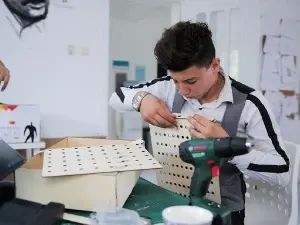
The best thing about school is being in class because I get to learn. Learning is important. I want to be able to read and write and prioritize education. Although I don’t really think about what I want to be in the future, I think working as a mechanic has become a part of my identity. I definitely want to go to college and I want to study engineering. That way, I can go back to the car world.

When I first came to Reyhanli, I liked it a lot. I still do, but I really hope that we can go back to Syria soon. Turkey is nice, but Syria is my country. It’s home and it always will be. For now, though, my goal is to be there for my mother and my family. I want to be able to support them in any way I can.

Bara’a Assleh, a Karam young leader

Bara’a Assleh

Rekindling Dreams

At 17, Bara’a Asleh stood on the cusp of graduation, looking back on a journey that had transformed her in ways she couldn’t have imagined. Growing up in a world marked by loss and displacement, she was once a shy girl who feared raising her hand in class, hesitant to share her thoughts. But Karam House changed everything. It became her sanctuary, her creative playground, and a space where she could uncover her potential, piece by piece.

At 17, Bara’a Asleh stood on the cusp of graduation, looking back on a journey that had transformed her in ways she couldn’t have imagined. Growing up in a world marked by loss and displacement, she was once a shy girl who feared raising her hand in class, hesitant to share her thoughts. But Karam House changed everything. It became her sanctuary, her creative playground, and a space where she could uncover her potential, piece by piece.

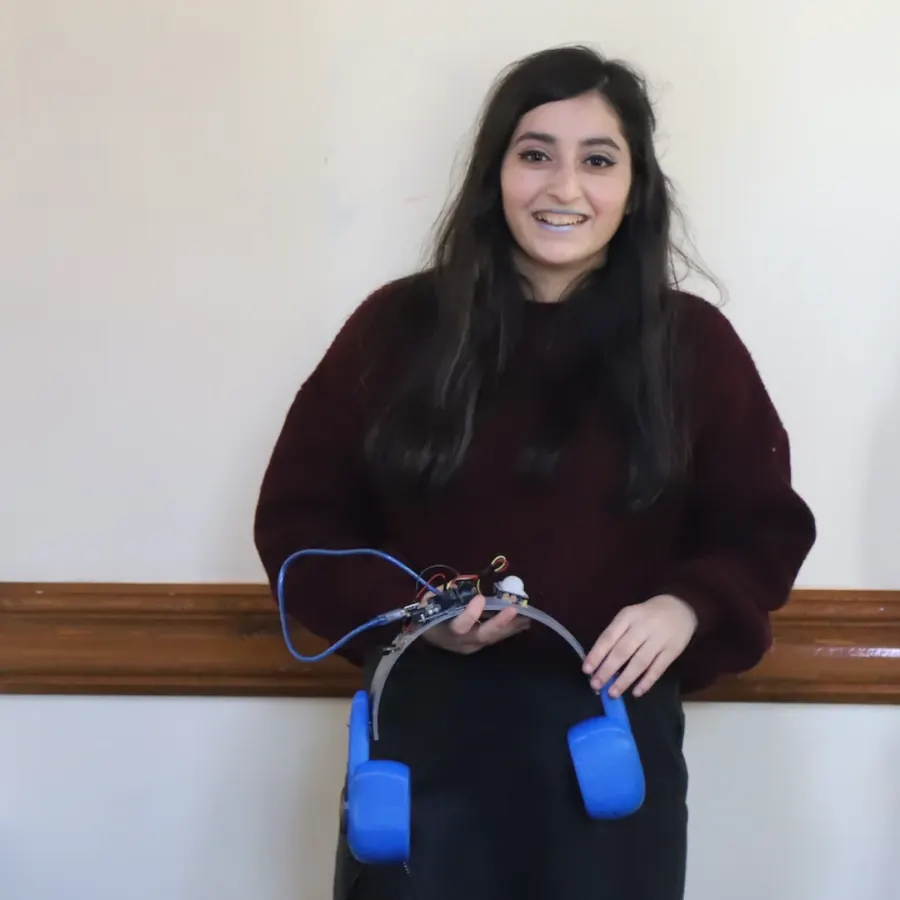
When Bara’a first entered Karam House, she had only a flicker of confidence. She hadn’t envisioned the transformation waiting for her. Through a series of workshops and hands-on projects, she stepped out of her comfort zone. One project, in particular, left a deep mark on her—designing a “time capsule” kit to help young children overcome their fear of visiting the dentist. It wasn’t just a Karam project; it was personal. Years ago, Bara’a had promised her father, who suffered from dental issues due to diabetes, that she would become a dentist one day. But when he passed away, her dream felt lost with him.

At Karam House, that dream resurfaced, but this time it was different. With mentors encouraging her to persevere and a community that made her feel safe, she began to dream again. The mentors at Karam House, like Kardeline, inspired her to believe nothing was impossible. In a place where failure was merely a stepping stone, she grew resilient, learning to try again after each setback. She learned that, with the right guidance and environment, she could achieve what she set her mind to.

Beyond the projects, Karam House nurtured a confidence in Bara’a that she hadn’t known before. It gave her a space to feel free, to feel capable, and to find a voice that had been stifled by years of grief and self-doubt. At Karam, she didn’t feel like the Syrian outsider struggling in a Turkish school environment that often felt unwelcoming. She felt seen, respected, and encouraged to rise above.

As she prepared to leave, Baar’a knew the lessons she learned at Karam House would stay with her for life. To her, Karam wasn’t just a program or a building; it was a lifeline. It had shown her the power of resilience and had rekindled a dream she thought she had lost. Karam House didn’t just provide an education; it gave Bara’a a future to believe in and the courage to pursue it.